What Causes Sudden Dizziness and Nausea in Women

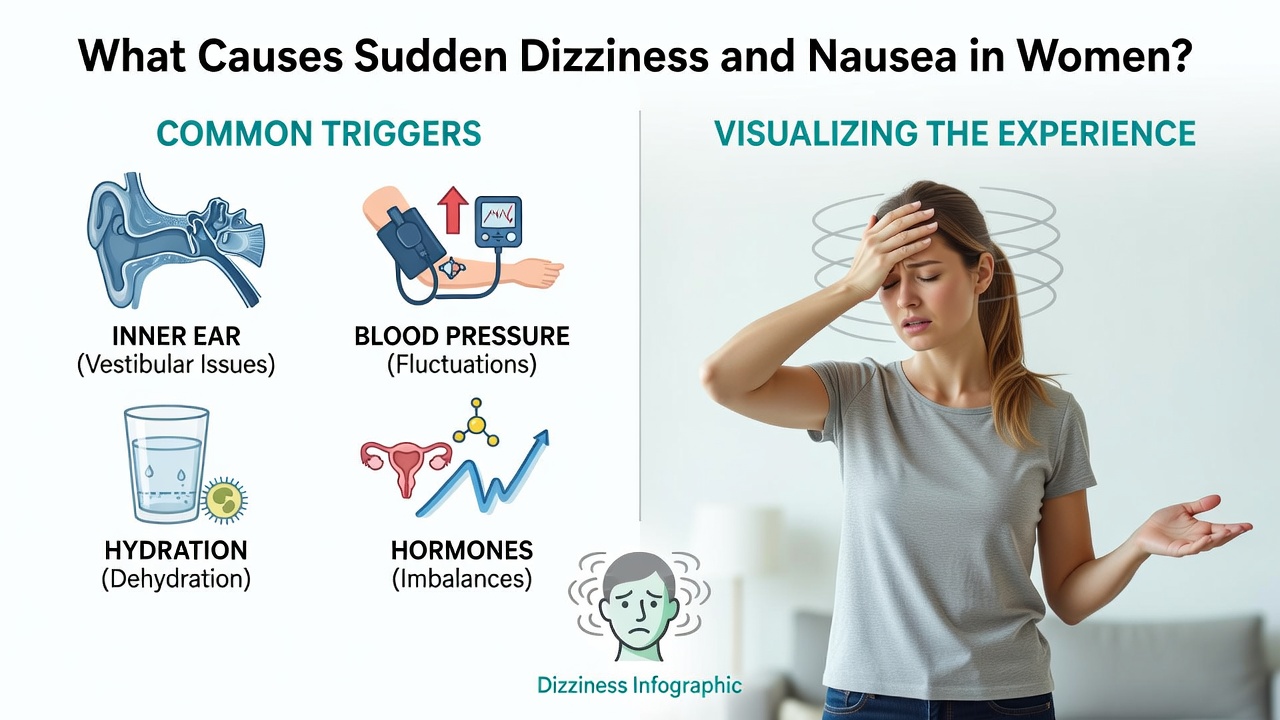
Sudden dizziness and nausea can strike without warning — one moment you feel fine, and the next the room is spinning and your stomach is churning. For women, these symptoms are particularly common, and the reasons are more varied than many people realise. Hormonal fluctuations, cardiovascular changes, inner ear disturbances, and neurological factors all intersect in ways that make women statistically more susceptible to these episodes than men. Understanding what causes sudden dizziness and nausea in women is the first step toward finding relief, identifying red flags, and knowing when to seek medical attention.
This article breaks down the most clinically recognised causes, explains why women experience them at higher rates, and outlines practical guidance for each scenario.
Hormonal Fluctuations: The Most Common Trigger
Estrogen and progesterone do far more than regulate the reproductive cycle. These hormones directly influence fluid balance, blood pressure regulation, inner ear sensitivity, and the neurological pathways that control nausea. Because women experience predictable — and sometimes dramatic — shifts in these hormones throughout their lives, dizziness and nausea often follow those hormonal waves.
Menstrual cycle: Many women report dizziness and nausea in the days before or during menstruation. The drop in estrogen just before the period begins can trigger migraines with vestibular components, while prostaglandins released during menstruation cause systemic effects including nausea and light-headedness. Research published in Headache journal has documented the strong link between menstrual hormonal changes and vestibular migraine in women.
Pregnancy: Dizziness and nausea are hallmark early pregnancy symptoms. Rising human chorionic gonadotropin (hCG) levels, increased blood volume, and blood pressure changes all contribute. A study in the American Journal of Obstetrics and Gynecology found that nausea and vomiting affect up to 80% of pregnant women, with dizziness commonly accompanying these episodes due to vasodilation and hypotension.
Perimenopause and menopause: Estrogen withdrawal affects the vasomotor system, leading to hot flashes that can cause sudden dizziness. The drop in estrogen also affects serotonin pathways — a neurotransmitter deeply involved in nausea and balance regulation. Women in perimenopause frequently report episodes of sudden onset dizziness that feel similar to vertigo.
Inner Ear and Vestibular Disorders
The vestibular system, housed within the inner ear, is responsible for spatial orientation and balance — inner ear disorders of any kind can trigger these episodes. When something disrupts it, the result is often sudden, intense vertigo accompanied by nausea and sometimes vomiting. Women are disproportionately affected by several vestibular conditions.
Benign Paroxysmal Positional Vertigo (BPPV): This is the single most common cause of sudden vertigo. Calcium carbonate crystals (otoconia) become dislodged from their normal position in the inner ear and migrate into the semicircular canals, sending false motion signals to the brain. Episodes last seconds to minutes and are typically triggered by head position changes — sitting up in bed, tilting the head back, or rolling over. Studies show women develop BPPV more frequently than men, possibly due to estrogen's role in calcium metabolism. According to the National Institute on Deafness and Other Communication Disorders (NIDCD), BPPV accounts for roughly 20% of all dizziness diagnoses.
Vestibular migraine: This is one of the most underdiagnosed causes of recurrent dizziness in women. Episodes can include vertigo lasting minutes to hours, nausea, sensitivity to motion, and sometimes headache — though headache is not always present. Women are three times more likely to experience migraine than men, and vestibular migraine follows that same gender bias. A landmark study in Cephalalgia established diagnostic criteria for vestibular migraine and noted its strong prevalence in women of reproductive age.
Labyrinthitis and vestibular neuritis: These inflammatory conditions of the inner ear or vestibular nerve typically follow a viral infection. They cause sudden, severe vertigo with intense nausea, sometimes persisting for days. Though not strictly gender-specific, they represent an important acute cause that should be ruled out clinically.
Ménière's disease: Characterised by episodic vertigo, tinnitus, a feeling of ear fullness, and fluctuating hearing loss, Ménière's is thought to result from abnormal fluid pressure in the inner ear. Episodes are often debilitating and are accompanied by significant nausea and vomiting. Research indicates Ménière's is slightly more common in women.
Cardiovascular and Blood Pressure Causes
The brain depends on a steady supply of oxygenated blood. Any disruption — even brief — can produce sudden dizziness and accompanying nausea.
Orthostatic hypotension: A rapid drop in high blood pressure upon standing causes light-headedness, blurred vision, and nausea. This is particularly common in women during pregnancy, in older women taking antihypertensive medications, and in younger women with naturally low blood pressure or dehydration. The condition is defined as a drop of at least 20 mmHg systolic within three minutes of standing. A study in the Journal of the American College of Cardiology found orthostatic hypotension affects a significant proportion of middle-aged and older adults and is associated with increased cardiovascular risk.
Anaemia: Iron deficiency anaemia is considerably more prevalent in women due to menstrual blood loss. When haemoglobin levels drop, less oxygen reaches the brain, causing dizziness, fatigue, and sometimes nausea. Women with heavy periods are particularly vulnerable. Supplementing iron under medical supervision often resolves these symptoms.
Vasovagal syncope: Triggered by emotional stress, pain, heat, or prolonged standing, vasovagal episodes cause a sudden drop in heart rate and blood pressure. The warning signs frequently include nausea, sweating, and pale skin before fainting or near-fainting occurs. Women, especially younger women, are more prone to vasovagal responses.
Arrhythmias and cardiac causes: Irregular heart rhythms can reduce cardiac output enough to cause brief cerebral hypoperfusion, manifesting as sudden dizziness and nausea. Women presenting with heart-related dizziness are less likely to report classic chest pain, making cardiovascular causes easy to miss without proper evaluation.
Neurological Causes
The brain and its associated structures play a central role in balance and nausea regulation. Neurological causes of sudden dizziness and nausea in women range from benign to potentially serious.
Classic migraine: Even without vestibular involvement, migraines frequently cause nausea and dizziness as part of the prodrome, aura, or headache phase. Because migraine prevalence peaks in women between ages 18 and 44, it represents one of the most common neurological causes in this demographic.
Multiple sclerosis (MS): MS is two to three times more common in women than men and can cause dizziness, vertigo, and nausea as presenting or recurring symptoms due to demyelination in the brainstem or cerebellum. Any new-onset neurological symptom warrants evaluation.
Transient ischemic attack (TIA) or stroke: While less common in younger women, TIAs and strokes can present with sudden dizziness, nausea, and imbalance — particularly when they affect the posterior circulation. Women are at increased risk of stroke during pregnancy and in the postpartum period, as well as with combined oral contraceptive use in those who smoke or have migraines with aura. Sudden severe dizziness accompanied by double vision, slurred speech, weakness, or severe headache requires emergency evaluation.
Other Common Causes Specific to Women
Thyroid disorders: Both hypothyroidism and hyperthyroidism are significantly more common in women. Thyroid imbalances affect metabolism, cardiovascular function, and neurological signalling — all of which can contribute to dizziness and nausea. Hypothyroidism can cause anaemia as a secondary effect, compounding dizziness further.
Anxiety and panic disorders: Women are diagnosed with anxiety disorders at roughly twice the rate of men. Anxiety triggers hyperventilation, which alters blood CO₂ levels and can produce profound dizziness, tingling, and nausea within seconds. Panic attacks may be mistaken for cardiac or vestibular events. A review in the American Journal of Psychiatry highlighted the close bidirectional relationship between vestibular dysfunction and anxiety disorders, noting that each can worsen the other.
Medication side effects: Oral contraceptives, blood pressure medications, antidepressants, and certain antibiotics can all cause dizziness and nausea, either at initiation or with dose changes. Women are statistically more likely to be prescribed multiple medications simultaneously, increasing the risk of interactions that cause these symptoms.
Dehydration and low blood sugar: Women often underestimate their hydration needs, particularly during exercise, illness, or hot weather. Dehydration reduces blood volume and blood pressure, causing light-headedness and nausea. Similarly, skipping meals or following restrictive diets can produce hypoglycaemia with rapid onset dizziness and nausea.
When to Seek Medical Attention
Most episodes of sudden dizziness and nausea resolve on their own or with simple interventions like hydration, rest, or positional changes. However, certain accompanying symptoms demand prompt medical evaluation. Seek emergency care immediately if dizziness and nausea occur alongside any of the following: sudden severe headache unlike previous headaches, difficulty speaking or understanding speech, double vision or sudden vision loss, weakness or numbness in the face, arm, or leg, loss of consciousness, chest pain or palpitations, or inability to walk or maintain balance.
For recurring episodes without these red flags, a thorough evaluation by a healthcare provider — including review of menstrual cycle timing, medication history, blood pressure measurements, and possibly audiological or neurological testing — is recommended. Many causes of sudden dizziness and nausea in women are highly treatable once correctly identified.
Practical Steps to Manage Episodes
While diagnosis and treatment should always be guided by a healthcare professional, several evidence-informed strategies can reduce the frequency and severity of dizziness and nausea episodes in women.
Stay consistently hydrated: Aim for adequate daily fluid intake, increasing intake during menstruation, exercise, and warm weather. Electrolyte balance is particularly important for women prone to low blood pressure.
Eat regularly: Avoiding prolonged fasting stabilises blood glucose and reduces hypoglycaemia-related episodes. Small, frequent meals are preferable for women who experience nausea related to hormonal changes or vestibular migraine.
Change positions slowly: For those prone to orthostatic hypotension or vasovagal episodes, rising slowly from seated or lying positions and pausing briefly before walking can prevent sudden drops in blood pressure. This is especially important for adults managing balance and vestibular problems.
Track symptoms relative to the menstrual cycle: Keeping a symptom diary that notes dizziness and nausea in relation to cycle phase can help identify hormonal patterns and guide treatment conversations with a physician.
Manage stress and anxiety: Mindfulness practices, controlled breathing techniques, and, where appropriate, professional psychological support can reduce anxiety-driven vestibular symptoms significantly.
Frequently Asked Questions
Scientific References
Editorial Information
Sarah Mitchell writes educational content covering health, nutrition, and wellness topics. Her work is intended to present information in a clear and accessible format while encouraging readers to consult qualified healthcare professionals for personal medical advice.