What Causes Recurring Yeast Infections: The Gut Connection

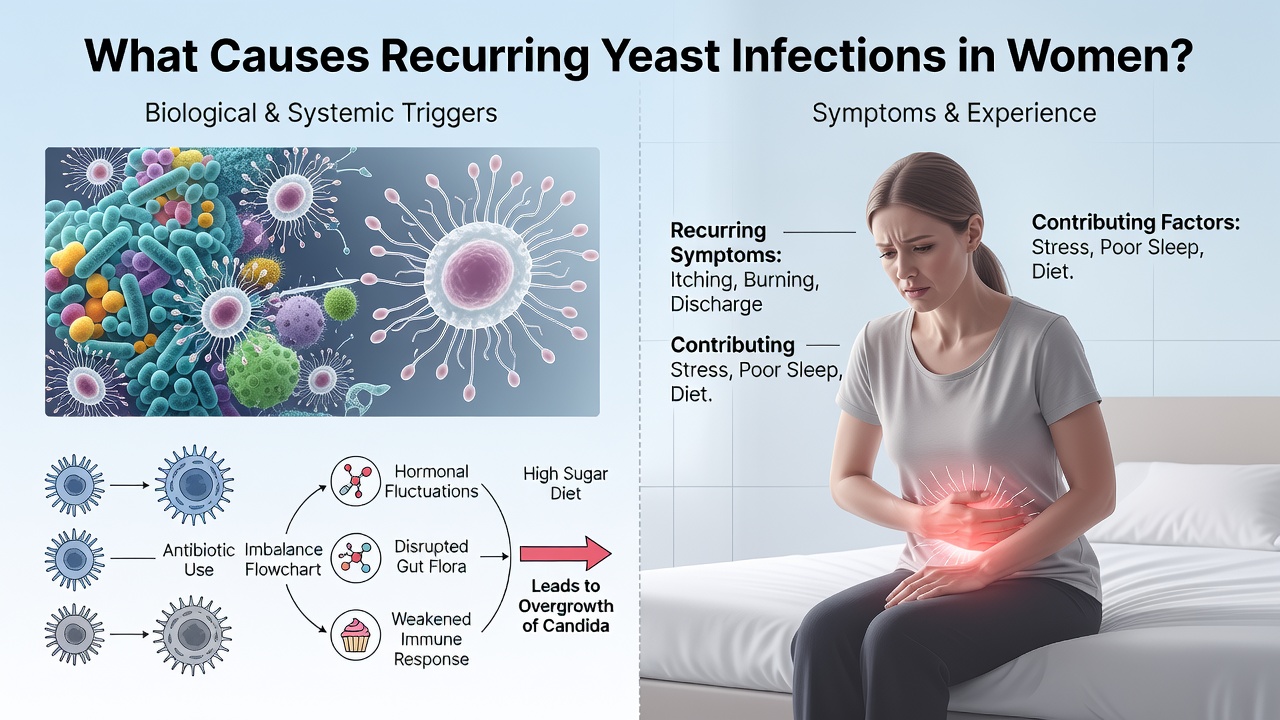
Recurring yeast infections — defined as four or more vaginal yeast infections within a single year — affect approximately 5–8% of women worldwide. Most women and even many clinicians focus exclusively on the vaginal environment when addressing these infections. However, a growing body of evidence points to the gut as a primary reservoir and driver of chronic Candida overgrowth. Understanding the gut-vaginal axis is now considered essential for breaking the cycle of recurrence.
This article explains exactly what causes recurring yeast infections in women from a gut-health perspective, covering the role of intestinal Candida colonisation, gut dysbiosis, diet, immune function, and practical strategies supported by clinical research.
The Gut as a Candida Reservoir
Candida albicans naturally inhabits the gastrointestinal tract of most healthy adults at low, non-harmful levels. Problems arise when this commensal yeast proliferates beyond its normal ecological niche. Research confirms that the gastrointestinal tract is the primary source from which Candida spreads to mucosal sites including the vagina. A study published in mBio demonstrated that vaginal Candida strains are genetically indistinguishable from gut strains isolated from the same patient, providing strong molecular evidence for the gut-to-vagina transmission route.
When intestinal Candida populations are high, constant reseeding of the vaginal environment occurs. Topical antifungal creams or even oral fluconazole treat the local vaginal infection but leave the intestinal reservoir largely untouched — which is precisely why symptoms return within weeks or months. Addressing the gut source is therefore a logical and increasingly evidence-based clinical priority.
Gut Microbiome Disruption and Candida Overgrowth
A balanced gut microbiome — dominated by bacteria such as Lactobacillus, Bifidobacterium, and Bacteroides species — actively suppresses Candida through competitive exclusion, production of short-chain fatty acids, and stimulation of host immune defences. When this balance is disrupted, a state called dysbiosis, Candida seizes the opportunity to expand.
Antibiotic use is the single most recognised trigger. Broad-spectrum antibiotics eliminate not only pathogenic bacteria but also the protective commensal populations that keep Candida in check. A study in Nature Medicine found that a single course of antibiotics produces measurable, long-lasting shifts in gut microbial ecology, creating windows of vulnerability to fungal overgrowth. Women who experience yeast infections immediately after antibiotic courses are experiencing this exact mechanism in real time.
Beyond antibiotics, other common disruptors include proton pump inhibitors (PPIs), non-steroidal anti-inflammatory drugs (NSAIDs), chronic psychological stress, and highly processed diets low in dietary fibre — all of which reduce microbial diversity and allow opportunistic fungi to flourish.
Diet: How Sugar and Refined Carbohydrates Feed Gut Candida
Candida albicans is an exceptionally efficient fermenter of simple sugars. Diets high in refined carbohydrates and added sugars provide a constant fuel source that sustains and expands intestinal fungal colonies. While the clinical evidence for strict "Candida diets" is still evolving, mechanistic studies consistently show that glucose availability directly upregulates Candida virulence factors, including biofilm formation and hyphal switching — the morphological transition that makes the fungus more invasive and more resistant to antifungals.
A study published in Frontiers in Microbiology demonstrated that high-glucose environments significantly enhanced Candida biofilm formation in vitro, explaining why diabetic women — who have chronically elevated blood glucose levels — experience dramatically higher rates of recurrent vulvovaginal candidiasis. Dietary fibre, conversely, feeds beneficial bacteria that produce butyrate and other metabolites hostile to fungal overgrowth.
Immune Function, the Gut, and Chronic Yeast Susceptibility
Approximately 70–80% of the body's immune tissue is located in the gastrointestinal tract, in a system known as gut-associated lymphoid tissue (GALT). The health of this system directly determines whether the immune response to Candida is effective or inadequate. Women with recurring yeast infections frequently show deficits in Th17 immune responses — the branch of immunity specifically responsible for defending mucosal surfaces against fungal pathogens.
Gut dysbiosis directly impairs Th17 cell development and function, creating a systemic immune gap that allows Candida to thrive at multiple mucosal sites, contributing to fatigue and brain fog in affected individuals. Research published in Cell Host & Microbe demonstrated that intestinal Lactobacillus species play a critical role in calibrating mucosal Th17 responses, connecting gut bacterial health directly to antifungal immunity at distant sites like the vagina.
Chronic stress compounds this problem by elevating cortisol, which suppresses both Th17 activity and secretory IgA — the primary antibody that coats gut and vaginal mucosal surfaces to block pathogen adhesion. Women managing high levels of chronic stress are therefore physiologically more vulnerable to recurrent fungal infections through this neuroimmune-gut pathway.
Hormones, the Gut Microbiome, and Yeast Infection Risk
Oestrogen has a complex and significant relationship with Candida. Higher oestrogen levels — as seen during pregnancy, with hormonal contraceptive use, or during the luteal phase of the menstrual cycle — increase vaginal glycogen deposition, which serves as a carbohydrate substrate for yeast proliferation. Oestrogen also appears to enhance Candida adherence to vaginal epithelial cells.
What is less commonly discussed is that the gut microbiome regulates oestrogen metabolism through a collection of microbes called the "estrobolome." Bacteria within this community produce beta-glucuronidase enzymes that deconjugate oestrogens in the gut, allowing them to be reabsorbed into circulation. A dysbiotic gut can therefore lead to abnormally elevated circulating oestrogen levels, further priming the vaginal environment for Candida overgrowth. This bidirectional relationship between hormones and gut health is an underappreciated factor in recurrent infections. The NIH National Institute of Child Health and Human Development recognises hormonal changes as a key contributor to vaginal yeast infection susceptibility.
Intestinal Permeability: How a "Leaky Gut" Worsens Candida Problems
In healthy individuals, the intestinal epithelium forms a tight barrier that controls what enters systemic circulation. When this barrier is compromised — a condition broadly referred to as increased intestinal permeability or "leaky gut" — Candida cells, fungal cell wall components like beta-glucan, and bacterial endotoxins can translocate into the bloodstream and lymphatic system.
Importantly, Candida itself produces virulence factors that actively damage the intestinal lining. Its hyphae can physically penetrate between epithelial cells, and it secretes aspartyl proteases and phospholipases that degrade tight junction proteins. A study in Infection and Immunity confirmed that Candida albicans hyphal invasion significantly disrupts epithelial barrier integrity, creating a self-perpetuating cycle: gut dysbiosis promotes Candida overgrowth, Candida overgrowth damages the gut barrier, barrier damage triggers systemic inflammation, and inflammation further impairs immune defences against Candida.
Breaking the Cycle: Gut-Focused Strategies for Recurrent Yeast Infections
Probiotics: Specific probiotic strains — particularly Lactobacillus rhamnosus GR-1 and Lactobacillus reuteri RC-14 — have demonstrated the strongest clinical evidence for reducing recurrent vulvovaginal candidiasis. A randomised controlled trial found that oral probiotic supplementation with these strains significantly reduced recurrence rates compared to placebo, likely by restoring both gut and vaginal Lactobacillus dominance and improving mucosal immunity.
Dietary modification: Reducing refined sugars, processed carbohydrates, and alcohol while increasing dietary fibre from vegetables, legumes, and whole grains helps restore the bacterial populations that suppress intestinal Candida. Fermented foods such as unsweetened yoghurt, kefir, sauerkraut, and kimchi introduce beneficial bacteria and support microbiome diversity.
Targeted antifungal therapy: In cases of confirmed gut Candida overgrowth, clinicians may consider intestinal antifungal agents. Natural compounds with demonstrated antifungal properties include caprylic acid, berberine, and oregano oil, though these should be used under medical guidance. Pharmaceutical antifungals like nystatin act locally in the gut and can reduce intestinal fungal burden without significant systemic absorption.
Stress management: Because chronic stress measurably suppresses mucosal immunity and disrupts gut microbiome composition, evidence-based stress reduction — including mindfulness-based stress reduction (MBSR), adequate sleep, and regular moderate exercise — forms a legitimate and clinically relevant component of recurrence prevention.
Blood sugar control: Women with insulin resistance, prediabetes, or diabetes should prioritise glycaemic control, as elevated blood glucose directly feeds intestinal and vaginal Candida populations and impairs neutrophil function — a key immune defence against fungal pathogens.
Frequently Asked Questions
Scientific References
Editorial Information
Sarah Mitchell writes educational content covering health, nutrition, and wellness topics. Her work is intended to present information in a clear and accessible format while encouraging readers to consult qualified healthcare professionals for personal medical advice.