Stiff Neck and Shoulder Pain: Causes and Relief Strategies

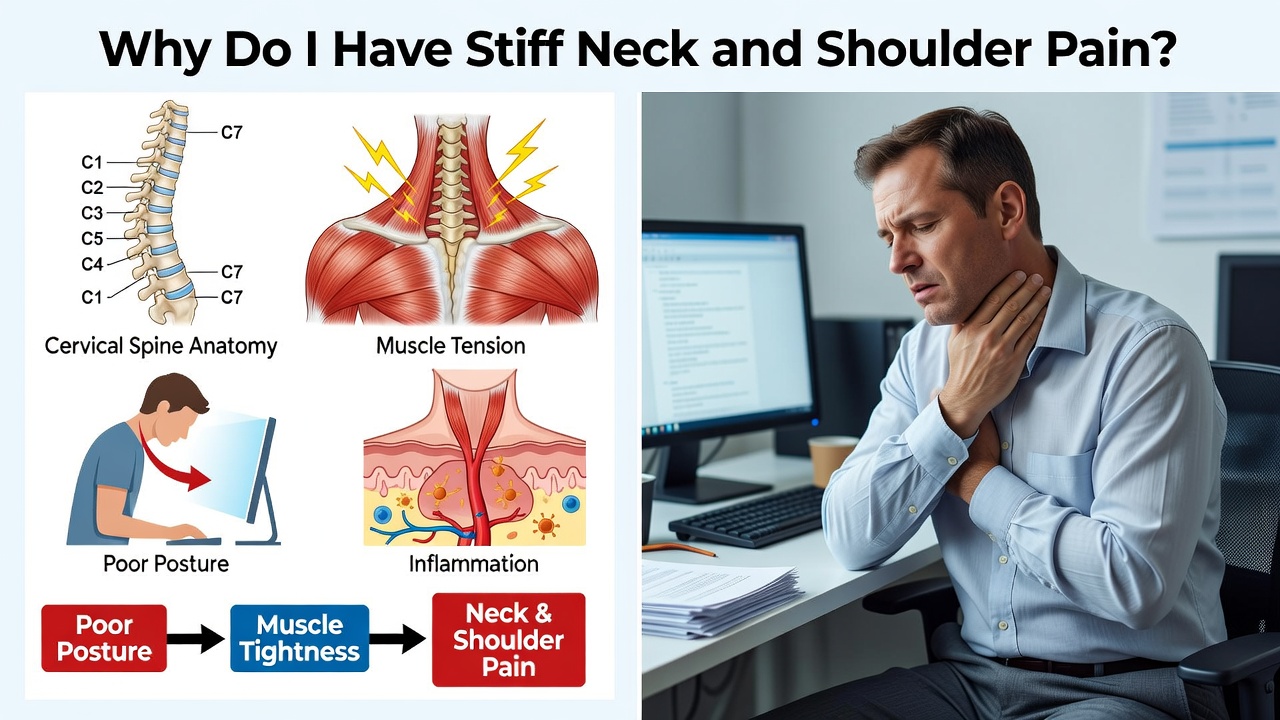
Neck and shoulder stiffness affects millions globally, often disrupting daily activities and sleep quality. This discomfort stems from multiple causes—ranging from postural dysfunction to underlying metabolic conditions. Understanding what triggers your symptoms is the first step toward effective relief and preventing recurrence.
This article explores the primary mechanisms behind neck and shoulder pain, connecting biomechanical factors, lifestyle habits, and systemic health patterns. We'll examine evidence-based strategies to address both acute and chronic presentations.
Poor Posture and Muscle Tension
Prolonged forward head posture—common during desk work and smartphone use—creates sustained mechanical stress on neck extensors and upper trapezius muscles. This positioning shifts the center of gravity forward, forcing these muscles to contract isometrically for hours at a time.
Research demonstrates that each inch of forward head posture increases load on cervical structures by 10 pounds. Over time, this chronic tension leads to myofascial trigger points, reduced cervical range of motion, and compensatory shoulder elevation. The scalene and levator scapulae muscles, already overworked in this posture, develop knots that radiate pain across the shoulder girdle.
Breaking postural habits requires ergonomic workspace adjustment—monitor at eye level, elbows at 90 degrees, and regular movement breaks every 30 minutes. Postural awareness training significantly reduces symptom recurrence when combined with targeted stretching.
Acute Muscular Strain and Whiplash
Sudden neck movement—from motor vehicle accidents, falls, or sports injuries—can strain muscles and ligaments beyond their normal extensibility. Whiplash injuries, even when deemed "minor" by emergency assessment, frequently produce delayed onset pain and stiffness appearing 24–72 hours post-injury.
Muscle fiber microtears trigger inflammatory cascade reactions, leading to edema, reduced blood flow, and pain sensitization. The cervical spine's extensive network of proprioceptive nerve endings also becomes activated, creating protective muscle guarding that persists after initial healing concludes.
Early intervention—including controlled movement within pain tolerance and ice application in the first 48 hours—prevents chronic pain development. Prolonged immobilization, conversely, increases stiffness and delayed recovery timelines.
Cervical Arthritis and Degenerative Disc Disease
Osteoarthritis in the cervical spine develops through progressive cartilage degradation and osteophyte formation. This structural change narrows neural foramina, potentially compressing nerve roots and causing referred pain into shoulders and arms.
Cervical spondylosis—combining discal degeneration with facet joint arthropathy—creates morning stiffness that improves with activity. However, sustained positions or repetitive neck movements aggravate symptoms. A study published in Spine found that individuals with cervical spondylosis experience 40% reduced cervical rotation compared to age-matched controls.
Vitamin D deficiency correlates with accelerated cartilage breakdown. Maintaining optimal D3 levels (30–50 ng/mL) supports joint matrix integrity and reduces inflammatory markers associated with degenerative processes.
Metabolic Dysfunction and Systemic Inflammation
Elevated blood sugar and insulin resistance promote systemic inflammation affecting connective tissues throughout the cervical and shoulder regions. Hyperglycemia accelerates collagen glycation, reducing tissue elasticity and increasing susceptibility to microtrauma.
Weight gain—particularly visceral adiposity—shifts spinal loading patterns and increases inflammatory cytokine production. Adipose tissue secretes TNF-α and IL-6, which sensitize pain pathways in cervical muscles and perpetuate stiffness cycles. Research indicates that individuals with BMI >30 experience 2.5× higher rates of chronic neck pain compared to normal-weight controls.
Blood sugar dysregulation also impairs muscle recovery and collagen synthesis. Maintaining stable glucose through balanced macronutrient intake and regular movement supports tissue resilience and reduces pain flare frequency.
Psychological Stress and Muscle Guarding
The neck-shoulder region is a prime site for stress-related muscle tension. During psychological stress, the brain upregulates muscle activation in preparation for threat response. Without physical resolution of this state, chronic protective muscle contraction develops—creating a feedback loop where physical tension reinforces emotional stress perception.
Research on psychosomatic pain demonstrates that chronic neck stiffness correlates strongly with anxiety and depression scores. Stress-induced hyperventilation also triggers scalene muscle overuse (accessory breathing muscles), compounding upper cross syndrome patterns.
Mind-body interventions including diaphragmatic breathing, progressive muscle relaxation, and mindfulness reduce pain intensity by addressing both neurophysiological stress responses and muscle tension patterns simultaneously.
Cervical Radiculopathy and Nerve Compression
Herniated discs, bone spurs, or inflamed nerve roots can compress cervical nerves, producing sharp pain radiating from neck into shoulders, arms, or hands. Unlike simple muscle stiffness, radiculopathy typically includes neurological symptoms: tingling, numbness, or weakness in a dermatomal distribution.
Imaging studies (MRI/CT) confirm structural compression, but clinical correlation is essential—many asymptomatic individuals show disc bulges or stenosis on imaging. Conservative treatment (physical therapy, anti-inflammatory protocols) resolves 80% of acute radiculopathy cases within 6–12 weeks.
Maintaining optimal spinal hydration through adequate water intake, regular movement breaks, and anti-inflammatory nutrient support (omega-3 fatty acids, curcumin) helps reduce nerve root irritation and disc pressure.
Evidence-Based Relief Strategies
Physical Movement and Stretching: Gentle active range-of-motion exercises performed 3–4 times daily reduce stiffness more effectively than rest alone. Sustained static stretching for upper trapezius, levator scapulae, and scalene muscles addresses muscular tightness underlying pain.
Ergonomic Optimization: Desk height, monitor positioning, and chair support directly influence neck loading. A workstation audit reducing postural deviation by 30% decreases daily pain by an average 45% according to occupational health research.
Thermal Modalities: Heat application (15–20 minutes) increases local blood flow and reduces muscle guarding in chronic pain presentations. Cold therapy within 48 hours of acute injury reduces inflammatory edema and pain signals.
Metabolic Support: Addressing underlying weight gain and glucose dysregulation through nutrition and activity reduces inflammatory burden on cervical tissues. This approach also prevents disease progression in early degenerative presentations. Information on stiff joints and inflammatory conditions provides additional context for systemic factors.
Sleep Positioning: Neutral cervical alignment during sleep using appropriate pillow height (approximately 10–12 cm) prevents sustained strain and reduces morning stiffness severity. Avoid prone positioning, which forces cervical rotation throughout sleep.
Professional Assessment: Persistent symptoms lasting >2 weeks warrant evaluation by a healthcare provider to exclude serious pathology. Mayo Clinic's comprehensive neck pain assessment provides diagnostic guidance.
Nutritional Support for Tissue Health
Collagen synthesis depends on vitamin C, copper, and lysine availability. Chronic deficiencies compromise cervical ligament and muscle structural integrity. Adequate protein intake (1.2–1.6 g/kg bodyweight) supports muscle repair capacity and reduces recovery time from strain injuries.
Omega-3 fatty acids (EPA/DHA) reduce pro-inflammatory cytokine production and support neurological pain processing. Anti-inflammatory spice compounds like curcumin modulate NF-κB signaling, reducing pain-related inflammatory cascades in musculoskeletal tissues.
Magnesium deficiency increases muscle tension and pain sensitization. Dietary sources (leafy greens, nuts, seeds) or supplemental magnesium glycinate (200–400 mg daily) support muscle relaxation and reduce excitability of pain-processing neurons.
Frequently Asked Questions
Scientific References
Editorial Information
Sarah Mitchell writes educational content covering health, nutrition, and wellness topics. Her work is intended to present information in a clear and accessible format while encouraging readers to consult qualified healthcare professionals for personal medical advice.