Can Poor Lymphatic Drainage Cause Weight Gain & Bloating?

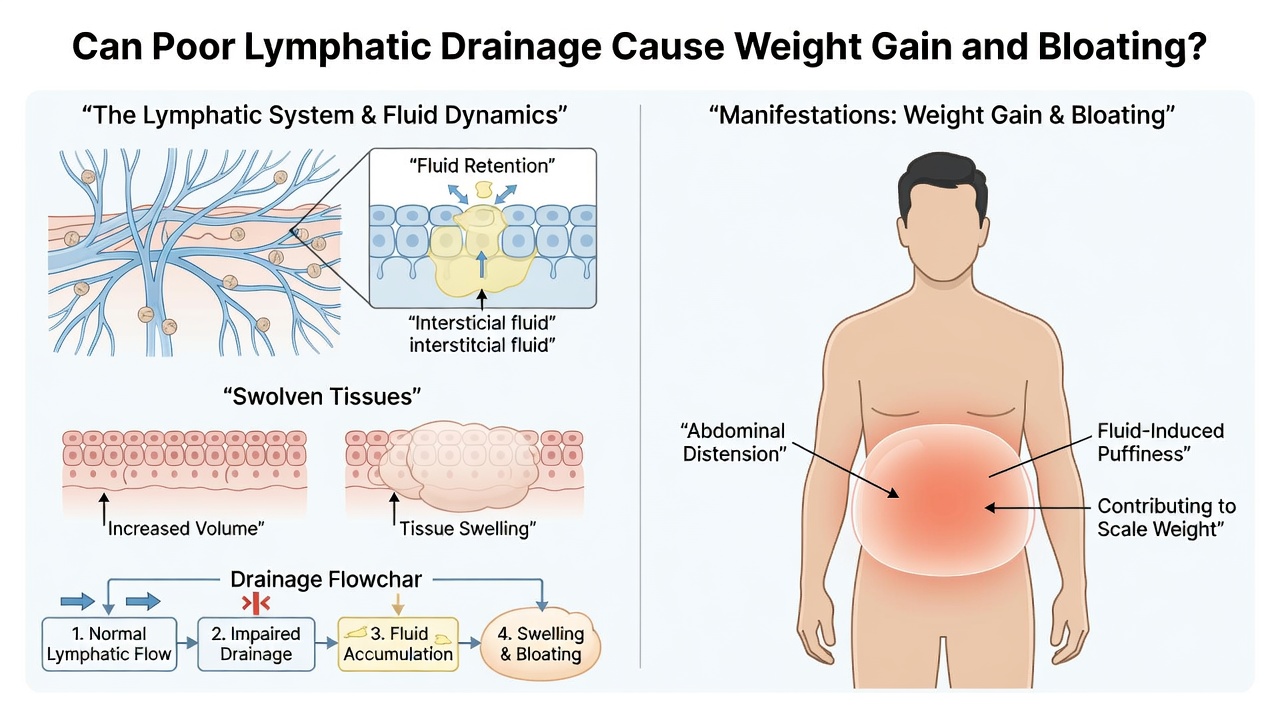
Yes — poor lymphatic drainage can cause weight gain and bloating, though the mechanism is more nuanced than simple fat accumulation. When the lymphatic system fails to circulate fluid efficiently, excess fluid pools in tissues, creating visible puffiness, a sensation of heaviness, and measurable increases on the scale. This is called lymphedema-related fluid retention, and it is distinct from — but often confused with — adipose (fat) tissue gain. Additionally, a sluggish lymphatic system impairs gut immunity, slows the absorption and transport of dietary fats, and promotes low-grade inflammation, all of which can indirectly contribute to metabolic weight gain over time.
Understanding the difference between fluid-driven and fat-driven weight changes is essential for choosing the right intervention. This article explains the science of lymphatic drainage, how dysfunction manifests as bloating and weight gain, and what evidence-based strategies can support lymphatic health.
What the Lymphatic System Actually Does
The lymphatic system is a network of vessels, nodes, and organs that runs parallel to the circulatory system. Its primary jobs include collecting interstitial fluid that leaks from blood capillaries, filtering waste and pathogens through lymph nodes, and returning cleaned fluid back to the bloodstream via the thoracic duct. Unlike the cardiovascular system, lymph vessels have no dedicated pump — they rely on skeletal muscle contractions, breathing, and vessel wall peristalsis to move fluid forward.
A critically underappreciated function of the lymphatic system involves dietary fat absorption. Specialised lymphatic vessels in the small intestine called lacteals absorb dietary fat metabolism products and fat-soluble vitamins packaged as chylomicrons. These chylomicrons travel through the mesenteric lymphatic network before entering the bloodstream. Research published by Cifarelli and Eichmann highlights that gut lymphatic function is tightly linked to both lipid metabolism and metabolic syndrome risk — disruption here has systemic consequences far beyond simple swelling. study
How Poor Lymphatic Drainage Causes Bloating
Bloating in the context of lymphatic dysfunction has two distinct origins: abdominal fluid accumulation and gut immune disruption.
Fluid accumulation: When lymph flow is impaired, protein-rich fluid accumulates in the interstitial spaces of the abdomen and intestinal wall. This creates a sensation of fullness, visible distension, and clothing tightness that fluctuates throughout the day — often worse in the evening when you have been upright and active. This is qualitatively different from gas-related bloating caused by fermentation in the colon, although both can coexist.
Gut immune disruption: Approximately 70% of the body's immune tissue resides in the gut immunity tissue (GALT). Lymphatic vessels maintain gut homeostasis by transporting immune cells and removing inflammatory mediators. When lymphatic drainage is compromised, inflammatory cytokines accumulate in gut tissue, increasing intestinal permeability — commonly referred to as "leaky gut." A review in Frontiers in Physiology demonstrated that mesenteric lymphatic dysfunction directly promotes intestinal inflammation and barrier dysfunction, both of which generate significant bloating and discomfort. study
Fluid Retention vs. Fat Gain: An Important Distinction
When people ask whether poor lymphatic drainage causes weight gain, the answer depends on which type of weight gain is being discussed.
Direct fluid weight: A litre of lymphatic fluid weighs approximately one kilogram. Individuals with moderate lymphatic dysfunction can accumulate two to five litres of excess interstitial fluid, adding two to five kilograms to the scale without any increase in body fat. This weight fluctuates based on posture, hydration, salt intake, and activity level. It is reversible once lymph flow is restored.
Indirect fat accumulation: Chronic lymphatic insufficiency creates conditions that promote actual metabolic weight management challenges and fat gain through several pathways. First, impaired lacteal function means dietary fats are not transported efficiently, potentially altering fat storage signals. Second, the chronic low-grade inflammation associated with lymphatic stagnation elevates cortisol and pro-inflammatory cytokines like TNF-α and IL-6, both of which promote adipogenesis and insulin resistance. Third, the discomfort and fatigue of chronic lymphedema reduce physical activity, creating a caloric surplus over time. A landmark study by Harvey and colleagues demonstrated that mice with defective VEGF-C signalling — causing lymphatic insufficiency — developed obesity and metabolic syndrome, confirming the causal link between lymphatic dysfunction and fat accumulation. study
Signs Your Lymphatic System May Be Sluggish
Recognising a compromised lymphatic system early allows for timely intervention. Common signs include:
- Pitting oedema: Pressing a finger into your ankle or shin leaves an indent that persists for several seconds, indicating fluid accumulation in the tissue.
- Morning puffiness: Facial swelling or puffy eyes upon waking that resolves partially during the day as muscle activity resumes lymph flow.
- Persistent abdominal bloating: A swollen belly that is not primarily gas-driven, accompanied by a feeling of heaviness rather than pressure.
- Fatigue and brain fog: Lymphatic stagnation allows metabolic waste products to accumulate, impairing cellular function and cognitive clarity.
- Frequent illness: Reduced lymph flow through lymph nodes impairs antigen presentation and immune surveillance.
- Skin changes: Early lymphedema may present as skin that feels tight, fibrotic, or has a texture resembling orange peel (peau d'orange).
- Weight that fluctuates dramatically: Swings of two to four pounds overnight or between morning and evening, driven by fluid shifts rather than caloric changes.
If several of these signs are present together, consulting a physician or certified lymphedema therapist is advisable. The National Cancer Institute provides detailed clinical guidance on lymphedema assessment and grading.
Common Causes of Poor Lymphatic Drainage
Understanding what compromises lymphatic function helps in targeting the right solution:
Sedentary lifestyle: Because lymph relies on muscle contractions to move, prolonged sitting is one of the most common triggers of lymphatic stagnation in otherwise healthy individuals. Even short walking breaks significantly increase lymph velocity.
Obesity itself: Excess adipose tissue compresses lymphatic vessels and promotes fibrotic changes in their walls, creating a vicious cycle where lymphatic dysfunction worsens obesity and obesity worsens lymphatic dysfunction. This bidirectional relationship is well-documented in the scientific literature. study
Chronic inflammation and poor diet: High-sodium diets promote water retention that burdens the lymphatic system. Ultra-processed foods generate systemic inflammation that damages lymphatic endothelial cells. Conversely, antioxidant-rich diets support nitric oxide production, which helps dilate lymphatic vessels.
Surgical intervention or cancer treatment: Lymph node removal or radiation therapy — particularly common in breast cancer treatment — is the leading medical cause of secondary lymphedema.
Hormonal changes: Oestrogen influences lymphatic vessel tone. Fluctuations during the menstrual cycle, pregnancy, and menopause are linked to episodes of fluid retention and bloating, partly mediated through lymphatic changes.
Tight clothing and poor posture: Constrictive garments and rounded posture compress major lymphatic pathways, particularly in the groin, axilla, and thoracic duct region.
Evidence-Based Strategies to Support Lymphatic Drainage
Several clinically supported strategies can improve lymphatic flow and reduce fluid-driven weight gain and bloating.
Manual Lymphatic Drainage (MLD): MLD is a specialised massage technique using light, rhythmic strokes to stimulate lymph vessel contractions and redirect fluid toward functioning lymph node basins. Multiple randomised controlled trials confirm it reduces limb volume and subjective symptoms of lymphedema. It is considered the gold standard non-pharmacological intervention.
Exercise and movement: Aerobic exercise, rebounding (mini-trampoline), yoga, and even brisk walking stimulate lymph flow through alternating muscle compression and relaxation. A study in Lymphology found that structured exercise programmes significantly reduced lymphedema symptoms in breast cancer survivors. study Even simple diaphragmatic breathing creates pressure changes that drive lymph through the thoracic duct.
Compression therapy: Medical-grade compression garments apply graduated external pressure that mechanically supports lymph propulsion in affected limbs. They are particularly effective when combined with MLD as part of a complete decongestive therapy programme.
Dietary modifications: Reducing sodium intake limits osmotic fluid retention. Increasing anti-inflammatory foods rich in flavonoids — such as berries, citrus, and green tea — supports lymphatic vessel integrity. Adequate protein intake is also essential; hypoalbuminaemia from poor protein status reduces oncotic pressure and worsens fluid leakage into tissues.
Hydration: Counterintuitively, adequate water intake supports lymphatic function. Dehydration causes lymph to become more viscous and sluggish. Drinking sufficient water throughout the day keeps lymph fluid moving efficiently.
Dry brushing: While the evidence base is limited compared to MLD, dry skin brushing using upward strokes toward lymph node clusters is a widely practised self-care technique reported to reduce subjective feelings of heaviness and puffiness. It likely works through mechanical stimulation of superficial lymphatic capillaries.
Cold and heat contrast hydrotherapy: Alternating cold and warm water during showering causes vasoconstriction and vasodilation that may passively encourage lymphatic movement, though rigorous clinical trials in this specific application remain limited.
When to See a Doctor
Mild lifestyle-related lymphatic sluggishness often responds well to the self-care strategies above. However, seek medical evaluation if you experience sudden onset of significant swelling in one limb or one side of the body, swelling that does not respond to elevation or rest, swelling accompanied by redness, warmth, and fever (which may indicate infection or cellulitis), progressive weight gain with oedema that cannot be explained by diet, or abdominal swelling combined with shortness of breath. These presentations may indicate secondary lymphedema, deep vein thrombosis, cardiac oedema, or other conditions requiring diagnosis and treatment beyond lifestyle modification.
Frequently Asked Questions
Scientific References
Editorial Information
Sarah Mitchell writes educational content covering health, nutrition, and wellness topics. Her work is intended to present information in a clear and accessible format while encouraging readers to consult qualified healthcare professionals for personal medical advice.