Why Do I Have Brain Fog and Fatigue Constantly?

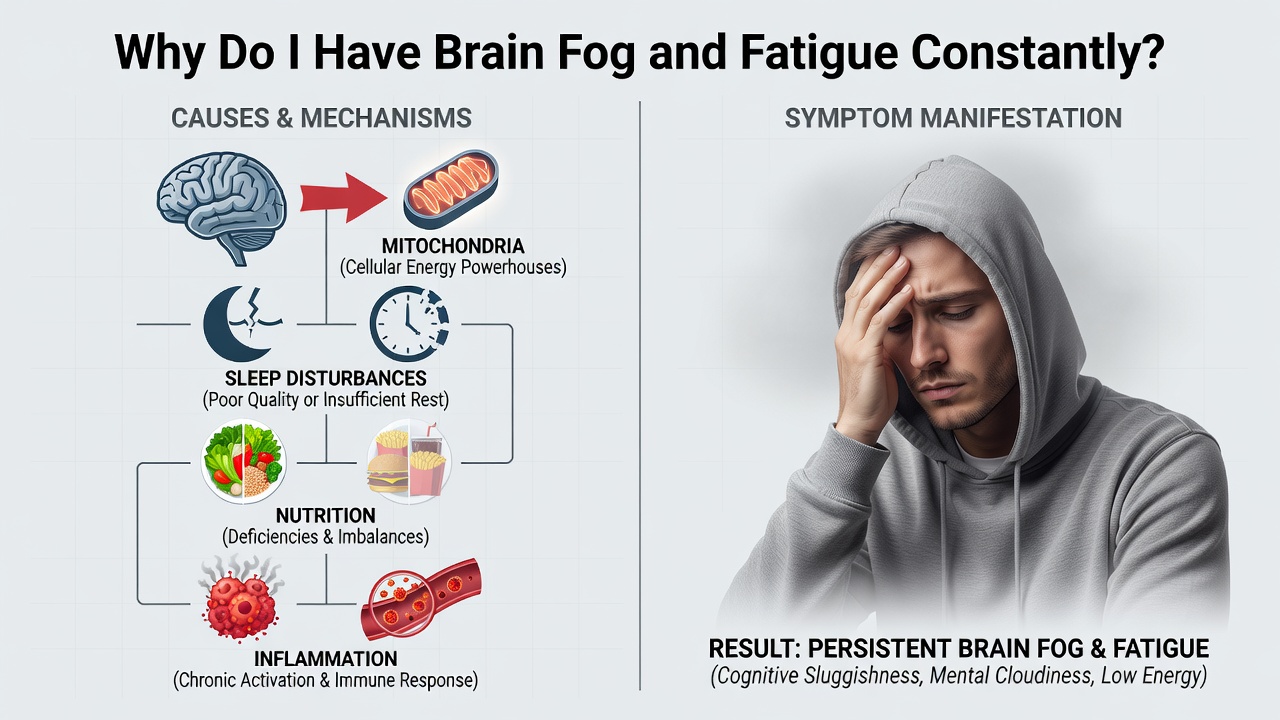
If you find yourself constantly asking "why do I have brain fog and fatigue constantly," you are far from alone. Millions of adults experience this frustrating combination of mental cloudiness, poor concentration, and persistent tiredness that does not resolve with a good night's sleep. Brain fog is not a medical diagnosis in itself, but it is a recognised symptom cluster — one that almost always signals something deeper is going on in the body or mind.
The short answer: chronic brain fog and fatigue are most commonly driven by nutrient deficiencies, disrupted sleep, hormonal imbalances, chronic low-grade inflammation, mental health conditions, or underlying medical disorders such as thyroid dysfunction. The longer answer involves understanding how these factors interact and what you can do to systematically address them. This article walks you through the most clinically validated causes and the evidence-based steps you can take to recover your mental sharpness and energy.
What Exactly Is Brain Fog?
Brain fog describes a state of cognitive impairment characterised by difficulties with memory, focus, processing speed, and mental clarity. People with brain fog often describe feeling like they are "thinking through mud," struggling to find words, losing their train of thought mid-sentence, or feeling mentally exhausted after even simple tasks. When combined with physical fatigue, the impact on work, relationships, and quality of life can be severe.
Importantly, brain fog is a symptom, not a condition. Researchers at institutions including the National Institutes of Health have recognised it as a common feature of dozens of different conditions, which is precisely why pinpointing the cause requires a methodical approach. A study published in 2021 highlighted cognitive impairment and fatigue as among the most debilitating and widely reported symptoms across multiple chronic health conditions, underscoring that these complaints deserve rigorous clinical attention rather than dismissal.
Nutrient Deficiencies: A Leading and Often Overlooked Cause
One of the most common and correctable reasons for persistent brain fog and fatigue is nutritional deficiency. Several micronutrients are absolutely essential for proper brain energy metabolism and neurotransmitter synthesis, and even borderline-low levels can impair cognitive function noticeably.
Vitamin B12 is perhaps the most well-established culprit. B12 is required for myelin synthesis — the protective sheath around nerve fibres — and for the production of red blood cells that carry oxygen to the brain. Deficiency is particularly common in vegans, older adults, and people taking metformin or proton pump inhibitors. A large body of research confirms that even subclinical B12 deficiency produces cognitive slowing, fatigue, and mood disturbance. A study demonstrated that B12 deficiency is significantly associated with cognitive impairment and increased homocysteine levels, a marker of neurological stress.
Iron deficiency, even before full anaemia develops, consistently impairs attention, working memory, and physical energy. Iron is needed for dopamine synthesis and for mitochondrial energy production. Women of reproductive age, vegetarians, and endurance athletes are at highest risk. Research published in peer-reviewed journals confirms that restoring iron stores in deficient individuals markedly improves both cognitive performance and fatigue levels.
Vitamin D has receptors throughout the brain, and low serum 25-hydroxyvitamin D levels are associated with increased rates of depression, cognitive decline, and chronic fatigue. A study found that vitamin D deficiency was independently associated with greater cognitive impairment in adults, suggesting that supplementation in deficient individuals may be a rational intervention. Magnesium deficiency similarly contributes to poor sleep quality, anxiety, and low energy, as magnesium is a cofactor in over 300 enzymatic reactions including ATP energy production.
Sleep Dysfunction and Circadian Disruption
The brain consolidates memories, clears metabolic waste via the glymphatic system, and restores neurochemical balance during sleep. When sleep is chronically insufficient or fragmented, cognitive performance deteriorates rapidly. Even moderate sleep restriction — six hours per night over two weeks — produces cognitive deficits equivalent to two full nights of total sleep deprivation, yet individuals often fail to perceive how impaired they have become.
Obstructive sleep apnoea (OSA) is a particularly significant and underdiagnosed cause of constant brain fog and fatigue. In OSA, repeated pauses in breathing during sleep cause intermittent oxygen desaturation and micro-arousals that destroy sleep architecture without the person being consciously aware. A study confirmed that OSA patients show significant deficits in attention, executive function, and processing speed, all of which recover substantially with continuous positive airway pressure (CPAP) therapy. If you snore loudly or wake unrefreshed regardless of sleep duration, a sleep study is warranted.
Circadian rhythm disruption from shift work, irregular sleep schedules, or excessive evening blue-light exposure also chronically impairs melatonin secretion and brain recovery. The National Institutes of Health provides detailed guidance on sleep disorders and their cognitive consequences, reinforcing that sleep hygiene is not optional — it is foundational to brain function.
Hormonal Imbalances That Cause Brain Fog and Fatigue
The brain is exquisitely sensitive to hormonal fluctuations. Several hormonal conditions are notorious for causing exactly the constellation of symptoms you may be experiencing.
Hypothyroidism — an underactive thyroid — is one of the most common hormonal disorders worldwide and one of the most reliably associated with brain fog and fatigue. Thyroid hormones regulate the metabolic rate of virtually every cell in the body, including neurons. When thyroid hormone levels fall, brain metabolism slows, producing mental dullness, memory problems, slowed thinking, depression, and overwhelming tiredness. A simple blood test measuring TSH and free T4 can detect this, and treatment with levothyroxine typically resolves cognitive symptoms.
Adrenal dysfunction, including the clinical entity sometimes referred to as HPA axis dysregulation, can also produce chronic fatigue and difficulty concentrating. Prolonged psychological stress drives chronically elevated or eventually blunted cortisol secretion, both of which impair hippocampal function and working memory. A study confirmed that chronic stress-induced cortisol dysregulation is directly associated with impaired prefrontal cognitive function.
Perimenopause and menopause frequently produce brain fog as oestrogen — which modulates serotonin, acetylcholine, and cerebral blood flow — declines. Similarly, low testosterone deficiency in men is associated with poor concentration, fatigue, and mood changes. Both conditions can be identified through blood panels and addressed with appropriate medical supervision.
Chronic Inflammation and Gut-Brain Axis Dysfunction
Emerging research has firmly established that chronic low-grade systemic inflammation impairs cognitive function. Inflammatory cytokines such as IL-1β, IL-6, and TNF-α cross the blood-brain barrier and interfere with neurotransmitter synthesis, particularly reducing the availability of serotonin and dopamine — the neurotransmitters most critical for motivation, mood, and mental clarity.
The gut microbiome plays a central role here. Gut dysbiosis — an imbalance in gut bacterial populations — is associated with increased intestinal permeability ("leaky gut"), systemic inflammation, and impaired production of neurotransmitter precursors, including approximately 90% of the body's serotonin, which is synthesised in the gut. A study found robust associations between gut microbiome composition, inflammatory markers, and cognitive performance, supporting the gut-brain axis as a legitimate therapeutic target for brain fog.
Dietary patterns rich in ultra-processed foods, refined sugars, and seed oils promote this inflammatory state, while Mediterranean-style diets characterised by vegetables, fatty fish, olive oil, and fermented foods consistently lower inflammatory markers and support better cognitive outcomes.
Depression, Anxiety, and Burnout
Depression and anxiety are not purely emotional conditions — they are neurobiological disorders that produce measurable changes in brain structure and function, including reductions in prefrontal cortex activity and hippocampal volume. Cognitive symptoms such as difficulty concentrating, slow thinking, and mental exhaustion are core diagnostic features of major depressive disorder, not secondary complaints. Many people with depression present primarily with fatigue and brain fog rather than overt sadness, leading to significant underdiagnosis.
Burnout — a state of chronic workplace or caregiving stress resulting in emotional exhaustion, depersonalisation, and reduced sense of accomplishment — produces a nearly identical cognitive profile. The World Health Organisation now formally classifies burnout as an occupational phenomenon. Both conditions respond to a combination of psychotherapy, lifestyle modification, and in appropriate cases, pharmacological support.
Other Medical Conditions Worth Investigating
Several other medical conditions can drive persistent brain fog and fatigue and must be ruled out through appropriate testing. These include:
Chronic fatigue syndrome (ME/CFS) — characterised by profound fatigue that worsens with exertion, post-exertional malaise, and significant cognitive impairment. A study found objective neuroinflammation in ME/CFS patients, providing biological confirmation that this is a genuine neurological condition.
Type 2 diabetes and insulin resistance — chronically elevated blood glucose damages small blood vessels in the brain and impairs neuronal glucose uptake, producing what some researchers have termed "type 3 diabetes" when referring to Alzheimer's risk. Even pre-diabetic insulin resistance measurably reduces cognitive performance.
Autoimmune conditions such as lupus, coeliac disease, and multiple sclerosis frequently present with cognitive complaints and fatigue as prominent features. Chronic infections including Lyme disease, Epstein-Barr virus reactivation, and long COVID are also well-documented causes of persistent brain fog and fatigue that can persist for months or years after the initial infection.
What You Can Do: A Systematic Approach
Because the causes of chronic brain fog and fatigue are so varied, a methodical approach is essential. Start with a comprehensive blood panel that includes: full blood count, ferritin, B12, folate, vitamin D, thyroid function (TSH and free T4), fasting glucose and HbA1c, CRP (inflammatory marker), and sex hormones if appropriate. This panel will identify the majority of the most common correctable causes.
Simultaneously, audit your sleep hygiene rigorously. Aim for seven to nine hours of consistent, high-quality sleep, in a cool and dark room, with screens off at least one hour before bed. If fatigue and cognitive symptoms persist despite adequate sleep duration, pursue a formal sleep study to rule out sleep apnoea.
Adopt an anti-inflammatory dietary pattern, minimise alcohol and ultra-processed foods, and prioritise regular moderate exercise — which has been shown in numerous randomised controlled trials to improve both cognitive function and subjective energy levels by enhancing neuroplasticity, reducing inflammation, and improving mitochondrial efficiency. Stress reduction through mindfulness-based practices, adequate social connection, and professional psychological support where needed rounds out a comprehensive recovery strategy.
Targeted supplementation — such as Pineal XT for circadian and melatonin support, B12 for documented deficiency, vitamin D3 for insufficient levels, or magnesium glycinate for sleep support — can accelerate recovery when deficiencies are confirmed, but supplementation should follow testing rather than precede it.
Frequently Asked Questions
Scientific References
Editorial Information
Sarah Mitchell writes educational content covering health, nutrition, and wellness topics. Her work is intended to present information in a clear and accessible format while encouraging readers to consult qualified healthcare professionals for personal medical advice.