Can Vitamin D Deficiency Cause Joint Pain in Adults?

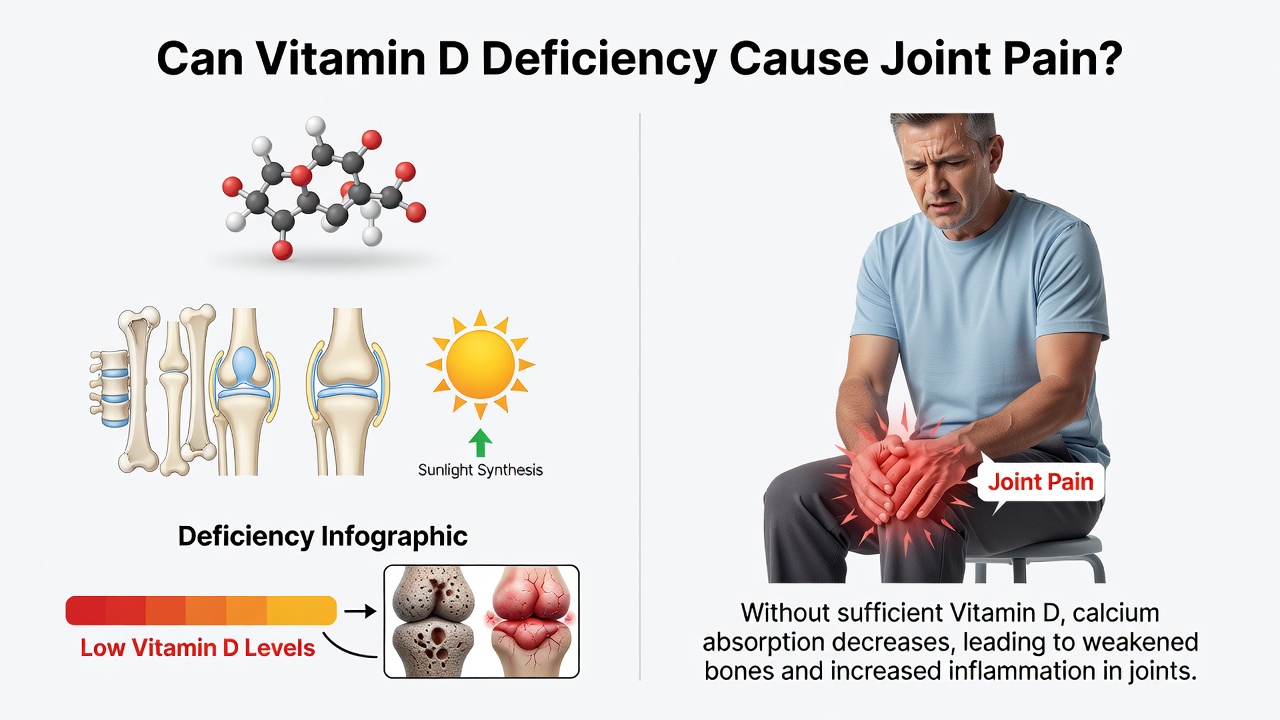
Yes — vitamin D deficiency can cause joint pain in adults. Low levels of this essential nutrient impair calcium metabolism, promote inflammation, and weaken the musculoskeletal structures that support healthy joint function. Multiple clinical studies confirm that adults with insufficient vitamin D report significantly higher rates of joint pain, stiffness, and musculoskeletal discomfort compared to those with adequate levels. If your joints ache and a clear cause has not been identified, checking your vitamin D status may be one of the most important steps you can take.
Vitamin D deficiency is far more common than most people realise. The National Institutes of Health estimates that roughly 35% of American adults are vitamin D deficient, with rates climbing higher among older adults, individuals with darker skin tones, and those who spend little time outdoors. Given that joints depend on healthy bone density, muscle strength, and controlled inflammation — all of which are regulated in part by vitamin D — the link between low levels and joint pain is both biologically plausible and clinically supported.
How Vitamin D Affects Joint Health
Vitamin D is a fat-soluble prohormone that regulates hundreds of physiological processes. In the context of joint health, its most critical roles involve bone mineralisation, cartilage integrity, muscle function, and immune-mediated inflammation. Vitamin D receptors (VDRs) are expressed in chondrocytes — the cells that build and maintain joint cartilage — meaning the nutrient acts directly on joint tissue, not merely as a bystander to bone metabolism.
When vitamin D levels fall below the clinically recognised threshold of 20 ng/mL (50 nmol/L), the body begins pulling calcium from bones to maintain serum calcium levels. This process weakens subchondral bone — the layer of bone immediately beneath cartilage — reducing the mechanical support joints rely on with every step and movement. The result is increased pressure on cartilage, accelerated wear, and pain.
Vitamin D also modulates the production of pro-inflammatory cytokines including interleukin-6 (IL-6) and tumour necrosis factor-alpha (TNF-α). Deficiency allows these inflammatory mediators to rise unchecked, creating a low-grade systemic inflammation that manifests as joint aching, swelling, and morning stiffness — symptoms commonly misattributed to ageing or early arthritis.
What the Research Says
The clinical evidence linking vitamin D deficiency to joint pain is substantial. A large cross-sectional study published in the Journal of Rheumatology found that adults with serum 25-hydroxyvitamin D levels below 20 ng/mL were significantly more likely to report widespread musculoskeletal pain, including joint pain, than those with sufficient levels. study
Research published in Arthritis & Rheumatism demonstrated that low vitamin D status is associated with greater knee pain and faster cartilage loss in adults with osteoarthritis, suggesting the nutrient plays a protective role in joint degeneration. study
A systematic review examining vitamin D and musculoskeletal pain concluded that deficiency is prevalent among patients presenting with non-specific musculoskeletal pain and that correction of deficiency can reduce pain severity in a meaningful proportion of cases. study This is clinically significant because many adults with unexplained joint pain are never tested for vitamin D status, delaying an inexpensive and highly actionable diagnosis.
Additionally, a 2016 meta-analysis in the International Journal of Rheumatic Diseases found that patients with rheumatoid arthritis consistently presented with lower vitamin D levels compared to healthy controls, and that lower levels correlated with higher disease activity scores. study
Joint Pain Symptoms Linked to Vitamin D Deficiency
Not all joint pain feels the same, and vitamin D-related joint pain has some characteristic features that distinguish it from mechanical injury or inflammatory arthritis. Understanding these patterns can help you and your healthcare provider determine whether a deficiency warrants investigation.
Deep, aching bone and joint pain: Unlike the sharp pain of an injury, vitamin D deficiency often produces a dull, diffuse ache that affects multiple joints simultaneously. The knees, hips, lower back, and shoulders are frequently affected. This aching is often worse at night or after periods of inactivity.
Morning stiffness: Joints may feel stiff and slow to warm up in the morning, a symptom that overlaps with early inflammatory arthritis but can also reflect the inflammation driven by low vitamin D levels.
Muscle weakness accompanying joint pain: Vitamin D is critical for muscle fibre function. Deficiency causes proximal muscle weakness — particularly in the hips and thighs — which places compensatory stress on the knees and lower back, amplifying joint pain even when the joint itself is not the primary site of pathology.
Tenderness on bone palpation: In more severe deficiency causing osteomalacia (softening of the bones), pressing directly on the sternum, tibia, or forearm bones may produce noticeable tenderness — a clinical sign that warrants prompt investigation.
Adults at Greatest Risk of Deficiency-Related Joint Pain
Certain groups are disproportionately likely to develop vitamin D deficiency severe enough to affect joint health. Awareness of these risk factors allows for earlier testing and intervention before joint damage accumulates.
Older adults (65+): Skin becomes less efficient at synthesising vitamin D from sunlight with age, and kidney conversion of vitamin D to its active form declines. Older adults also tend to spend less time outdoors and eat fewer vitamin D-rich foods.
Individuals with obesity: Vitamin D is fat-soluble and sequestered in adipose tissue, reducing the amount available in circulation. Studies show that obese individuals require substantially higher supplemental doses to achieve the same serum levels as lean individuals.
People with limited sun exposure: Those who work indoors, live at northern latitudes, or routinely use high-SPF sunscreen produce minimal vitamin D cutaneously, relying entirely on dietary and supplemental sources.
Individuals with darker skin tones: Melanin reduces ultraviolet B absorption, meaning more sun exposure is needed to produce equivalent vitamin D. This places adults with darker complexions at significantly elevated deficiency risk.
People with malabsorption conditions: Crohn's disease, coeliac disease, and post-bariatric surgery patients absorb significantly less dietary vitamin D, making deficiency common even with apparently adequate intake.
Testing Your Vitamin D Levels
The definitive test for vitamin D status is a serum 25-hydroxyvitamin D [25(OH)D] blood test, available through any standard laboratory. Most clinicians use the following reference ranges: deficient below 20 ng/mL, insufficient between 20–29 ng/mL, and sufficient at 30–100 ng/mL. Some integrative medicine practitioners advocate for levels between 40–60 ng/mL for optimal musculoskeletal health, though this remains an area of ongoing research.
If you have unexplained joint pain alongside fatigue, frequent illness, or muscle weakness, ask your doctor to include a 25(OH)D test in your next blood panel. It is inexpensive, widely available, and can significantly influence your treatment direction. Retesting approximately three months after beginning supplementation allows assessment of whether levels have normalised.
Restoring Vitamin D Levels and Relieving Joint Pain
Supplementation: Vitamin D3 (cholecalciferol) is the preferred supplemental form, as it raises serum 25(OH)D levels more effectively than D2 (ergocalciferol). For adults with confirmed deficiency, therapeutic doses typically range from 2,000–5,000 IU daily under medical supervision. A 2018 randomised controlled trial found that vitamin D3 supplementation in deficient adults significantly reduced musculoskeletal pain scores over a 12-week period. study
Dietary sources: Fatty fish (salmon, mackerel, sardines), egg yolks, beef liver, and fortified dairy and plant milks provide meaningful dietary vitamin D. However, dietary sources alone rarely correct a true deficiency — supplementation is typically necessary.
Sunlight exposure: Sensible midday sun exposure (10–30 minutes on arms and legs, several times per week) supports vitamin D synthesis depending on latitude, season, and skin tone. This should complement — not replace — supplementation in deficient individuals.
Pairing with vitamin K2 and magnesium: Vitamin D works synergistically with vitamin K2 (which directs calcium to bones rather than soft tissues) and magnesium (which activates vitamin D metabolism). Ensuring adequate intake of these cofactors optimises the clinical benefit of vitamin D restoration.
It is important to note that while correcting deficiency reliably reduces deficiency-related joint pain, it is not a cure-all for arthritis or structural joint damage. Vitamin D is one component of a comprehensive approach to joint health that may also include physical activity, weight management, anti-inflammatory nutrition, and targeted medical treatment.
Frequently Asked Questions
Scientific References
Editorial Information
Sarah Mitchell writes educational content covering health, nutrition, and wellness topics. Her work is intended to present information in a clear and accessible format while encouraging readers to consult qualified healthcare professionals for personal medical advice.