Can High Blood Sugar Cause Nerve Damage in Feet?

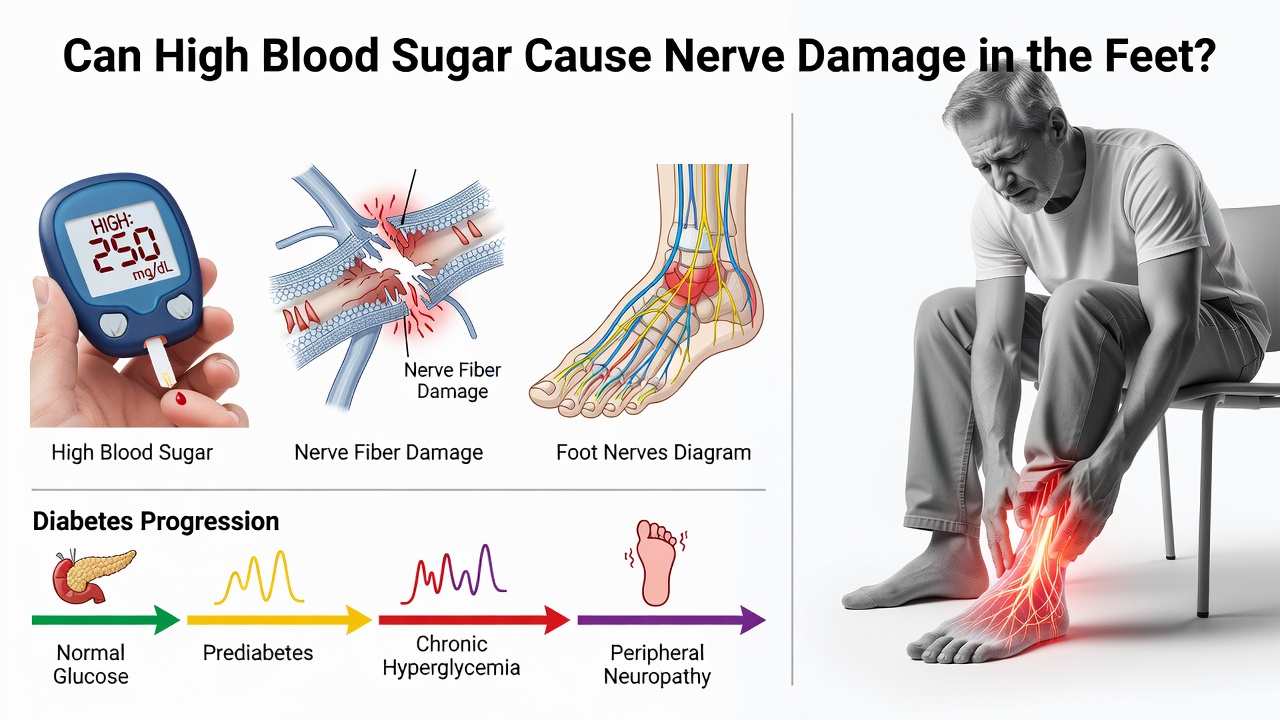
Yes — high blood sugar can absolutely cause nerve damage in the feet. This condition, known as diabetic peripheral neuropathy, is one of the most common and serious complications of chronically elevated blood glucose. Roughly 50% of people with diabetes will develop some form of neuropathy during their lifetime, and the feet are nearly always the first place affected. The damage is progressive, often silent in its early stages, and can lead to loss of sensation, chronic pain, ulceration, and even amputation if left unmanaged.
Understanding how excess glucose injures peripheral nerves — and what warning signs to watch for — is essential for anyone managing diabetes or prediabetes. This article breaks down the mechanism of injury, explains the stages of foot nerve damage, and outlines evidence-based strategies to slow or prevent its progression.
How High Blood Sugar Damages Peripheral Nerves
Nerve cells — neurons — are among the most metabolically demanding cells in the body. When blood glucose remains persistently elevated, a cascade of biochemical events progressively injures both the nerve fibers themselves and the tiny blood vessels that supply them.
The primary mechanism involves the polyol pathway. Excess glucose is converted by the enzyme aldose reductase into sorbitol, which accumulates inside nerve cells, causing osmotic stress and depleting myoinositol — a compound critical for normal nerve conduction. Simultaneously, sorbitol is oxidized into fructose, generating oxidative stress that damages cellular membranes and mitochondria. A landmark study published in the New England Journal of Medicine demonstrated that intensive blood glucose control significantly reduced the incidence of neuropathy, confirming glucose toxicity as the core driver.
A second major pathway involves advanced glycation end-products (AGEs). When glucose binds non-enzymatically to proteins and lipids, it forms AGEs that stiffen blood vessel walls, impair microcirculation to the nerve (endoneurial hypoxia), and trigger inflammatory signaling. Research has shown that AGE accumulation in peripheral nerve tissue correlates directly with the severity of neuropathic symptoms.
Third, chronically elevated glucose disrupts nitric oxide (NO) synthesis, reducing vasodilation in the small vessels feeding nerve fibers. This leads to endoneurial ischemia — essentially, the nerves slowly starve of oxygen. Protein kinase C (PKC) activation under hyperglycemic conditions further amplifies vascular injury and inflammation. Together, these overlapping mechanisms explain why high blood sugar is so destructive to the long, delicate nerve fibers that travel all the way from the spinal cord to the toes.
Why the Feet Are Affected First
Diabetic neuropathy follows a characteristic "length-dependent" pattern, meaning the longest nerve fibers are damaged earliest. The nerves supplying the feet and lower legs are the longest in the peripheral nervous system — some extending more than a meter from the lumbar spinal cord. Greater length means greater metabolic demand, more total surface area exposed to glucose toxicity, and a longer distance over which disrupted axonal transport must travel.
This is why patients almost always notice symptoms beginning in the toes and feet before they appear in the hands or other areas. The distribution is often described as a "stocking-and-glove" pattern: numbness, tingling, or pain starts at the extremities and gradually moves upward toward the knees or wrists as neuropathy worsens over time.
Additionally, the feet experience constant mechanical pressure, minor traumas, and temperature extremes — all of which a healthy nervous system would normally signal. When neuropathy blunts that protective sensation, small injuries go unnoticed and can escalate into serious infections or ulcers before a patient is even aware anything is wrong. The CDC estimates that diabetic neuropathy is responsible for more than 60% of non-traumatic lower-limb amputations in the United States.
Types of Nerve Fibers Affected and What You Feel
Peripheral neuropathy does not damage all nerve fibers equally or simultaneously. Understanding which fiber types are involved helps explain the wide variety of symptoms patients report.
Small fiber neuropathy (C-fibers and A-delta fibers) is typically the earliest form. These fibers carry pain and temperature signals. Their damage produces burning pain, hypersensitivity to light touch (allodynia), electric shock sensations, or a feeling that the feet are walking on hot coals. Because these fibers are thin and unmyelinated, they are vulnerable to glycemic injury before larger fibers show abnormalities on standard nerve conduction studies — making early diagnosis challenging without specialized small fiber testing such as skin punch biopsy or quantitative sensory testing.
Large fiber neuropathy (A-beta fibers) develops as damage progresses. These fibers handle vibration sense, proprioception (the awareness of foot position), and deep pressure. Their loss creates the classic "numb feet" sensation — the feeling of walking on cotton wool — along with loss of balance and a positive Romberg sign. Patients may notice they can no longer feel the texture of carpet beneath their feet or detect a pebble in their shoe.
Motor fiber involvement is seen in more advanced cases, causing weakness of the intrinsic foot muscles. This leads to characteristic deformities such as hammer toes or Charcot foot — a severe condition where bones in the foot actually fracture and collapse because protective pain signals are completely absent. A comprehensive review in Diabetes Care highlighted that Charcot neuroarthropathy, though relatively rare, carries devastating consequences and is almost entirely preventable with early neuropathy detection and foot care.
Risk Factors That Accelerate Nerve Damage
Not every person with elevated blood sugar develops neuropathy at the same rate. Several co-existing factors dramatically increase the risk and speed of progression.
Duration of hyperglycemia is the single strongest predictor. The longer blood glucose remains elevated — even at moderately high levels — the greater the cumulative nerve injury. This is why HbA1c over time matters more than any single blood glucose reading. The Diabetes Control and Complications Trial (DCCT) demonstrated a 60% reduction in neuropathy development among patients with type 1 diabetes who maintained tight glycemic control, a finding replicated across type 2 diabetes populations.
Hypertension and dyslipidemia compound the vascular component of neuropathy. Elevated LDL cholesterol and triglycerides contribute to endoneurial lipid deposition and small vessel atherosclerosis, worsening the ischemic injury to nerves. A prospective study in Diabetes Care found that dyslipidemia independently predicted incident neuropathy even after adjusting for glycemic control.
Smoking and alcohol use independently damage peripheral nerves and dramatically worsen diabetic neuropathy. Nicotine causes vasoconstriction of the microvasculature, and chronic alcohol consumption is directly neurotoxic. Patients who smoke or drink heavily face substantially accelerated progression and poorer responses to treatment.
Obesity contributes through both insulin resistance and low-grade systemic inflammation. Adipose tissue releases pro-inflammatory cytokines (including TNF-alpha and IL-6) that promote oxidative stress in nerve tissue. Metabolic syndrome — the clustering of high blood sugar, abdominal obesity, high blood pressure, and abnormal lipids — appears to accelerate neuropathy beyond what any single factor would predict alone.
Prediabetes is increasingly recognized as a cause of neuropathy. Many patients are diagnosed with small fiber neuropathy at the prediabetic stage, before they meet formal criteria for diabetes. This underscores that nerve damage begins well before blood sugar reaches diabetic thresholds.
Warning Signs You Should Never Ignore
Early recognition of neuropathic symptoms gives patients and clinicians the best opportunity to intervene. The following symptoms warrant prompt medical evaluation, especially in anyone with diabetes, prediabetes, or a family history of metabolic disease.
Tingling or "pins and needles" in the toes or feet — particularly if persistent or worse at night — is frequently the first reported symptom of small fiber neuropathy. Burning pain in the soles or tops of the feet, especially when the feet are at rest or under bedsheets, is another early red flag. Some patients describe it as walking on hot sand or having their feet stung by bees.
Unexplained numbness — the gradual loss of the ability to feel light touch, temperature, or pinpricks — is a sign that larger fibers are being affected. This is particularly dangerous because it eliminates the protective feedback loop that would normally alert you to a blister, cut, or pressure sore. Balance problems or frequent trips and falls may signal proprioceptive fiber involvement.
Foot sores or ulcers that heal slowly or not at all are medical emergencies in people with diabetes. Combined neuropathy (loss of protective sensation) and peripheral artery disease (reduced blood flow) create conditions where minor wounds rapidly become infected, potentially requiring hospitalization or surgery. Any non-healing wound on a diabetic foot should be evaluated within 24 hours by a healthcare provider.
How Diabetic Foot Neuropathy Is Diagnosed
Clinical diagnosis of peripheral neuropathy is primarily based on a careful physical examination. The monofilament test — pressing a thin nylon fiber against specific points on the sole of the foot — assesses protective sensation. Loss of sensation to a 10-gram monofilament is strongly associated with risk of foot ulceration. Vibration perception is tested with a tuning fork applied to the great toe; reduced perception predicts large fiber loss.
Nerve conduction studies (NCS) and electromyography (EMG) measure the speed and amplitude of electrical signals in large myelinated fibers. However, NCS cannot detect small fiber neuropathy, which is why skin punch biopsy — counting intraepidermal nerve fiber density — has become an important diagnostic tool for early or atypical presentations. Quantitative sensory testing (QST) measures thresholds for temperature and vibration and is used in both diagnosis and clinical research.
The American Diabetes Association recommends that all patients with type 2 diabetes be screened for neuropathy at diagnosis, and those with type 1 diabetes beginning five years after diagnosis, with annual assessments thereafter. Early detection allows for timely intervention before irreversible nerve loss occurs. Guidelines from the ADA Standards of Medical Care reinforce that glycemic control remains the most effective intervention for preventing neuropathy progression.
Treatment and Prevention: What the Evidence Supports
Glycemic control is the cornerstone of both prevention and management. Multiple large trials have confirmed that bringing HbA1c to target — generally below 7% for most adults with diabetes — significantly reduces the incidence and rate of progression of neuropathy. Every percentage point reduction in HbA1c translates into meaningful protection for peripheral nerves.
Pain management for symptomatic neuropathy includes several FDA-approved options. Pregabalin and gabapentin are anticonvulsants that reduce abnormal nerve firing and are first-line treatments for diabetic neuropathic pain. Duloxetine, a serotonin-norepinephrine reuptake inhibitor (SNRI), is FDA-approved specifically for diabetic peripheral neuropathic pain and demonstrates efficacy in multiple randomized controlled trials. Tricyclic antidepressants (TCAs) such as amitriptyline are widely used off-label and can be effective, though their side effect profile limits use in older patients.
Alpha-lipoic acid (ALA), a potent antioxidant, has the strongest evidence among nutritional supplements for diabetic neuropathy. A systematic review and meta-analysis published in Diabetes Care found that intravenous ALA significantly reduced neuropathic pain scores compared to placebo, with oral forms showing more modest but meaningful benefit over 3–5 years of use.
Foot care practices are critical for preventing complications. Patients should inspect their feet daily using a mirror if necessary, wear well-fitted diabetic footwear, avoid walking barefoot, keep skin moisturized to prevent cracking, and never attempt to trim calluses or corns at home. Any wound, blister, or discoloration should prompt immediate professional attention. Regular podiatric care — at least annually and more frequently with active neuropathy — is a standard recommendation supported by clinical guidelines.
Lifestyle modification plays a significant supportive role. Regular aerobic exercise improves glycemic control, reduces oxidative stress, and may promote small nerve fiber regeneration. A randomized trial in Diabetes Care demonstrated that supervised exercise training improved intraepidermal nerve fiber density in patients with diabetic neuropathy — one of the few interventions shown to potentially reverse early nerve damage. Smoking cessation, alcohol reduction, blood pressure control, and lipid management are all independently important components of a comprehensive neuropathy prevention strategy.
Frequently Asked Questions
Scientific References
Editorial Information
Sarah Mitchell writes educational content covering health, nutrition, and wellness topics. Her work is intended to present information in a clear and accessible format while encouraging readers to consult qualified healthcare professionals for personal medical advice.