Why Do I Have Cold Hands Even in Summer?

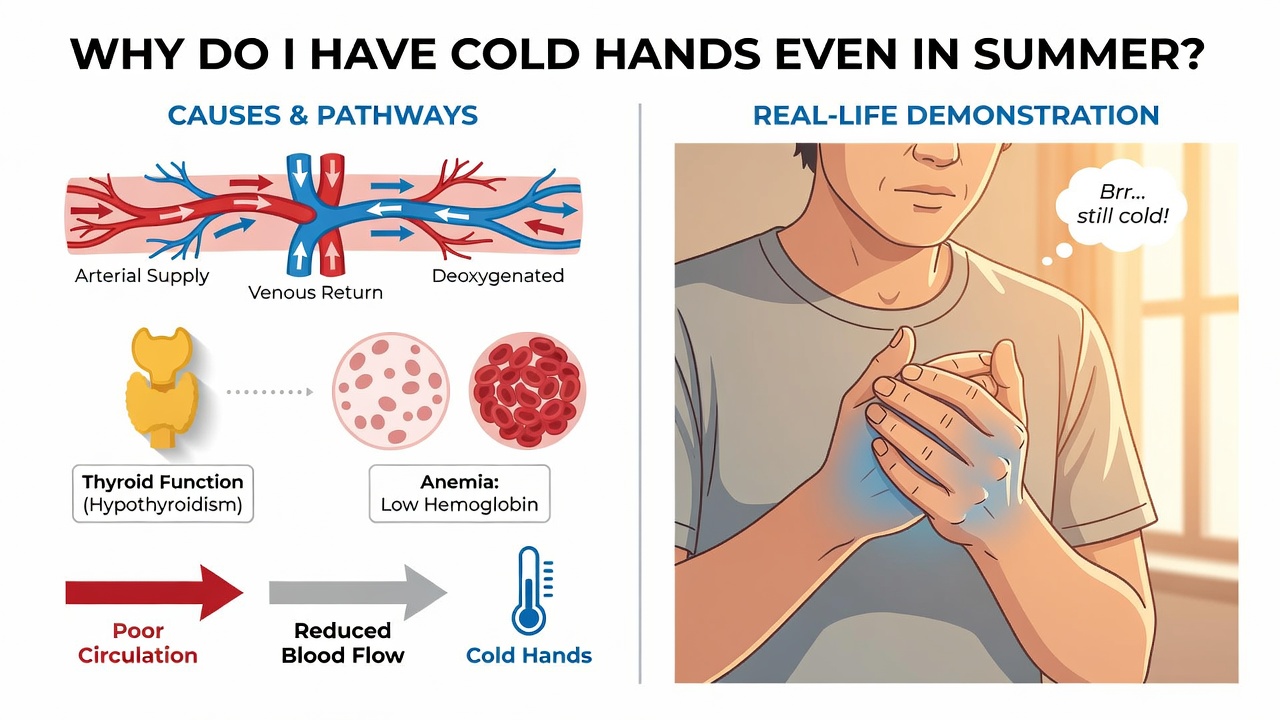
Cold hands in the middle of summer shouldn't happen—yet millions of people experience chronically cold extremities regardless of season or ambient temperature. This persistent symptom often signals an underlying circulatory or metabolic issue rather than a simple thermoregulation problem. Understanding why your hands remain cold even when everyone around you is warm is the first step toward identifying the root cause and seeking appropriate treatment.
Poor Circulation and Vasomotor Dysfunction
The most common reason for cold hands in summer is inadequate blood flow to the extremities. Your cardiovascular system prioritizes delivering blood to vital organs, and under certain conditions, peripheral blood vessels constrict, reducing warmth to your hands and feet. This vasoconstriction can occur due to several physiological mechanisms, even in warm environments.
Vasomotor dysfunction—the inability of blood vessels to properly regulate their diameter—represents a primary culprit. Research has shown that individuals with compromised endothelial function experience reduced nitric oxide production, which impairs the ability of arteries to dilate appropriately. This leads to sustained vasoconstriction and chronically cold extremities, a symptom often overlooked until it becomes severe enough to impact daily function.
Raynaud's Phenomenon and Primary vs. Secondary Forms
Raynaud's phenomenon is a condition characterized by exaggerated vasospastic responses to cold or stress, causing dramatic color changes in the fingers and toes. During an attack, affected digits typically turn white (from reduced blood flow), then blue (from deoxygenation), before flushing red as blood returns. The condition affects approximately 3–5% of the general population, with women accounting for the majority of cases.
Primary Raynaud's occurs without an underlying systemic disease and is generally benign, though uncomfortable. Secondary Raynaud's develops alongside autoimmune conditions such as systemic sclerosis, lupus, or rheumatoid arthritis. Interestingly, some individuals with Raynaud's experience constant mild cold hands even outside of typical attack phases, contributing to year-round symptoms unrelated to ambient temperature.
Hypothyroidism and Metabolic Factors
Thyroid hormones regulate metabolic rate and thermogenesis—the production of body heat. Hypothyroidism, or underactive thyroid function, slows metabolism and reduces heat generation throughout the body. People with undiagnosed or inadequately treated hypothyroidism frequently report cold hands and feet, often accompanied by fatigue, weight gain, and cold sensitivity disproportionate to environmental conditions.
The connection between thyroid function and extremity temperature occurs through multiple pathways: reduced metabolic heat production, altered sympathetic nervous system activity, and impaired vascular responsiveness. Even subclinical hypothyroidism—where thyroid-stimulating hormone (TSH) is slightly elevated but T3 and T4 remain within normal ranges—can produce noticeable cold extremities in susceptible individuals.
Anemia and Reduced Oxygen-Carrying Capacity
Iron-deficiency anemia reduces the blood's ability to transport oxygen throughout the body. When hemoglobin levels drop, tissues—including your hands—receive insufficient oxygen, prompting the body to prioritize core organs. In response, peripheral blood vessels constrict to redirect available oxygen-rich blood toward the brain, heart, and lungs. This compensatory mechanism leaves extremities chronically cold and potentially pale or bluish in appearance.
Vitamin B12 deficiency, another form of anemia, similarly impairs oxygen transport and can produce cold hands alongside neurological symptoms like pins-and-needles sensations. Women of childbearing age, vegetarians, and individuals with malabsorption disorders face elevated risk for these nutritional deficiencies, making screening particularly important for persistent cold extremities.
Diabetes and Vascular Complications
Chronic hyperglycemia damages blood vessel walls through glycation and oxidative stress, a process central to diabetic complications. Diabetic neuropathy and peripheral arterial disease both contribute to cold hands by impairing sensation and reducing blood flow. Individuals with poorly controlled diabetes often experience cold extremities due to microvascular dysfunction, where small blood vessels lose their ability to dilate appropriately in response to metabolic demands.
The relationship between elevated blood sugar and extremity temperature extends beyond vascular damage; hyperglycemia also impairs the autonomic nervous system's ability to regulate blood vessel diameter. This dual mechanism makes cold hands a common early warning sign of uncontrolled diabetes, sometimes preceding more obvious symptoms like increased thirst or urinary frequency.
Nutritional Deficiencies and Magnesium
Magnesium plays a critical role in vascular function and muscle relaxation. Deficiency impairs the ability of blood vessel smooth muscle to relax, perpetuating vasoconstriction and reducing peripheral blood flow. The problem compounds because magnesium deficiency is widespread—up to 50% of people may have inadequate intake—yet frequently goes undiagnosed due to the difficulty of measuring total body stores through standard blood tests.
Calcium, another essential mineral for vascular regulation, works synergistically with magnesium. Imbalance between these minerals can exacerbate vasomotor dysfunction. Similarly, vitamin B6 and niacin support healthy blood vessel tone and microcirculation; deficiencies in these micronutrients may manifest as chronically cold extremities, particularly in individuals with restrictive diets or malabsorption disorders.
Autonomic Nervous System Dysregulation
The autonomic nervous system controls involuntary functions including blood vessel constriction and dilation. Dysautonomia—dysfunction of the autonomic nervous system—can manifest as inappropriate vasoconstriction despite warm external temperatures. Conditions such as postural orthostatic tachycardia syndrome (POTS), small fiber neuropathy, and other autonomic disorders frequently produce chronically cold hands as a cardinal symptom.
Chronic stress and anxiety amplify sympathetic nervous system activation, causing sustained blood vessel constriction. People with anxiety disorders or chronic stress often report disproportionate cold hands and feet because their nervous systems maintain heightened "fight or flight" responses, prioritizing core body temperature over peripheral warmth.
Medications and Beta-Blockers
Certain medications directly impair peripheral circulation. Beta-blockers, commonly prescribed for hypertension and heart conditions, reduce heart rate and cardiac output as part of their therapeutic mechanism. This reduction in overall blood circulation can produce cold hands and feet, particularly during exertion when peripheral vasodilation is insufficient to meet metabolic demands.
Other medications associated with cold extremities include decongestants and stimulants, which promote vasoconstriction as a desired side effect. Estrogen-containing hormonal contraceptives can also increase cold hands risk in susceptible women. If your cold hands coincided with starting a new medication, discussing alternative options with your healthcare provider may resolve the symptom.
When to Seek Medical Evaluation
Cold hands accompanying color changes (white, blue, or red discoloration), pain, numbness, or tissue damage warrant immediate medical attention. Similarly, cold hands that develop suddenly after years of normal peripheral warmth, or that worsen progressively, require professional investigation. Accompanying symptoms like fatigue, weight gain, joint pain, or unexplained rashes may indicate systemic conditions requiring specialist assessment.
Schedule a primary care appointment if cold hands persist for more than a few weeks or significantly impact your quality of life. Your physician can order appropriate screening tests—thyroid function studies, complete blood count, metabolic panel, and autoimmune markers—to identify the underlying cause. Understanding how cardiovascular conditions affect overall health becomes especially important when cold extremities signal potential vascular compromise or systemic disease.
Evidence-Based Management Strategies
While treating the underlying cause remains paramount, several evidence-supported approaches can improve symptoms while diagnosis is pending. Increasing dietary magnesium and B vitamins through whole foods or supplementation addresses common deficiencies. Maintaining consistent body weight, avoiding tobacco smoke, and managing stress through regular exercise or meditation reduces sympathetic nervous system overactivity.
Layer clothing to retain core body heat even in summer, as your body will naturally redirect more blood to the core if overall temperature remains low. Avoid prolonged exposure to air conditioning and ensure adequate hydration, as dehydration reduces blood volume and exacerbates cold hands. For individuals with confirmed Raynaud's or vasomotor dysfunction, calcium channel blockers and other vasodilators prescribed by physicians can provide significant relief when conservative measures prove insufficient.
Frequently Asked Questions
Scientific References
Editorial Information
Sarah Mitchell writes educational content covering health, nutrition, and wellness topics. Her work is intended to present information in a clear and accessible format while encouraging readers to consult qualified healthcare professionals for personal medical advice.