Why Do I Feel Nauseous After Taking Supplements?

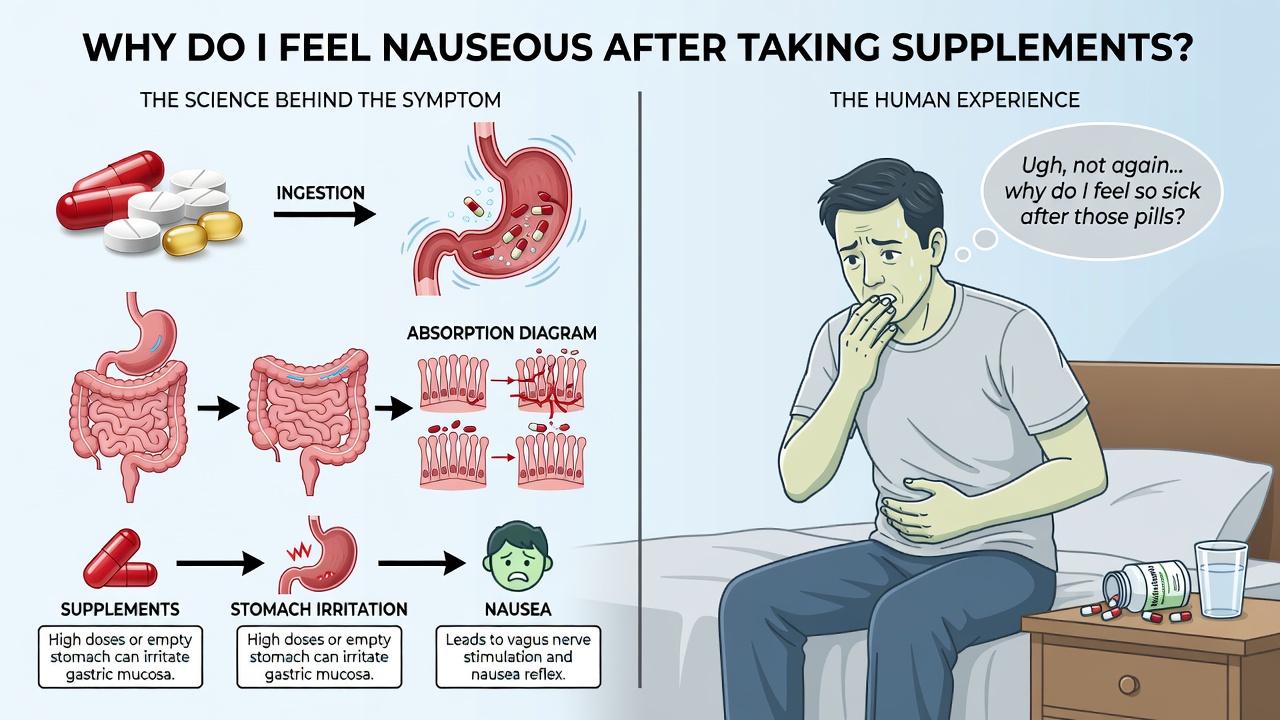
Nausea after taking supplements is one of the most commonly reported side effects, affecting an estimated 10–15% of regular supplement users. While most supplements are safe, the experience of feeling queasy or uncomfortable shortly after consumption can discourage people from maintaining beneficial health routines. Understanding the mechanisms behind supplement-induced nausea—and knowing how to prevent it—can help you reap the benefits of supplementation without the digestive distress.
The good news: in most cases, nausea from supplements is entirely preventable with simple adjustments to timing, dosage, and preparation method.
Empty Stomach and Rapid Absorption
The most common cause of supplement-related nausea is taking supplements on an empty stomach. When your stomach contains no food, concentrated nutrients and active compounds are absorbed rapidly into your bloodstream. This sudden spike in nutrient concentration can trigger nausea, particularly with vitamins and minerals that have a bitter taste or irritating properties.
Fat-soluble vitamins (A, D, E, K) and minerals like iron and magnesium are especially prone to causing nausea when taken without food. Iron supplements, for example, can irritate the stomach lining directly, causing discomfort. A foundational rule: always check the label for "take with food" instructions, and follow them precisely.
High Doses and Individual Tolerance
Exceeding recommended dosages is a primary driver of supplement-induced nausea. Your digestive system has a tolerance threshold for nutrients. Once that threshold is exceeded, your body signals distress through nausea, vomiting, or stomach cramping.
Vitamin C, B vitamins, and zinc are notorious for causing nausea when taken in megadoses. Research on zinc supplementation shows that doses exceeding 30 mg daily are associated with gastrointestinal upset and nausea in sensitive individuals. Similarly, high-dose B6 and vitamin C can overwhelm the digestive tract.
Start with the lowest effective dose and increase gradually if needed. This allows your digestive system to acclimate to the supplement.
Ingredient Sensitivity and Fillers
Not all nausea comes from the active ingredient itself. Many supplements contain binders, fillers, and additives that can trigger sensitivity in certain individuals. Common culprits include magnesium stearate, titanium dioxide, cellulose, and artificial colorants.
Some people also experience nausea from probiotics or herbal supplements containing compounds that alter gut flora or stimulate digestive secretions. Gut dysbiosis and digestive sensitivity can make the digestive tract more reactive to unfamiliar microorganisms in probiotic formulas, particularly when first introduced.
Review supplement ingredient lists carefully. If nausea persists, consider switching to a cleaner formulation with fewer additives or a different brand.
Which Supplements Most Commonly Cause Nausea?
Iron supplements: Iron is highly irritating to the stomach lining and frequently causes nausea, especially on an empty stomach. Taking iron with vitamin C and food can reduce symptoms.
Magnesium: Magnesium citrate and oxide forms are known bowel irritants. They can cause nausea and loose stools. Magnesium glycinate is gentler on the digestive tract.
Vitamin D: Particularly in high doses (4,000+ IU), vitamin D can cause nausea in some people. Fat-soluble vitamins need dietary fat for absorption, so always consume with a meal containing fat.
Fish oil and omega-3s: These supplements can cause fishy burps and nausea if not taken with food. They may also thin blood slightly, which can add to digestive discomfort in sensitive individuals.
Multivitamins: Because they contain multiple nutrients in one formulation, multivitamins increase the likelihood of nausea, especially if taken on an empty stomach or in high-potency formulas.
Proven Prevention Strategies
Take supplements with food: This is the single most effective strategy. A meal containing fat, protein, and carbohydrates slows nutrient absorption and buffers stomach acid, reducing irritation. Take supplements 15–30 minutes after eating a substantial meal.
Divide your dose: Instead of taking your full dose at once, split it into two smaller doses taken at different times. This reduces the concentration of nutrients hitting your stomach simultaneously.
Stay hydrated: Drink plenty of water throughout the day. Dehydration can worsen nausea and reduce nutrient absorption efficiency. Aim for at least 8–10 glasses daily.
Start low and go slow: Begin with half the recommended dose for one week, then increase to the full dose. This allows your digestive system to adapt gradually.
Switch supplement forms: If a tablet causes nausea, try a liquid or powder form. Conversely, if powder causes issues, a capsule might be better tolerated. Some formulas also offer delayed-release or enteric-coated versions designed to minimize stomach irritation.
Take at night: Some people tolerate supplements better when taken before bed, as the slower digestive activity overnight reduces nausea sensation.
Timing and Drug-Supplement Interactions
Nausea can also result from timing conflicts with other medications or supplements. Certain combinations reduce absorption or increase stomach irritation. For example, taking calcium supplements with iron reduces iron absorption and increases gastrointestinal distress.
Space supplements that may interact at least 2 hours apart. If you take prescription medications, consult your healthcare provider or pharmacist about potential interactions that could trigger nausea. The FDA provides guidance on supplement-drug interactions.
When Nausea Signals a Bigger Problem
While mild nausea is usually manageable, certain symptoms warrant medical evaluation. Seek professional advice if you experience:
- Severe or persistent vomiting lasting more than a few hours
- Abdominal pain or cramping beyond mild discomfort
- Signs of allergic reaction (difficulty breathing, swelling, rash)
- Nausea that worsens despite preventive measures
- Concurrent symptoms like diarrhea, fever, or headaches
Some supplements can cause serious interactions with underlying health conditions. If you have a sensitive stomach, history of gastrointestinal disease, or take multiple medications, consult a healthcare provider before starting any new supplement regimen.
Practical Tips for Immediate Relief
If you've already taken a supplement and feel nauseous, try these immediate relief strategies:
- Eat something mild: Crackers, toast, or applesauce can settle your stomach and absorb excess stomach acid.
- Ginger tea or ginger supplements: Ginger has been shown to reduce nausea safely and effectively.
- Peppermint tea: Peppermint soothes digestive muscles and can ease nausea.
- Avoid strong smells or tastes: These can intensify nausea sensation.
- Rest in a cool environment: Overheating can worsen nausea; stay cool and recline if possible.
Bottom Line
Supplement-induced nausea is common but highly preventable. The majority of cases stem from taking supplements on an empty stomach, exceeding recommended doses, or using formulations with ingredients your digestive system doesn't tolerate well. By following label instructions, taking supplements with food, starting with lower doses, and being mindful of ingredient composition, you can eliminate this side effect and maintain a consistent supplement routine that supports your long-term health.
If preventive strategies don't work, don't hesitate to consult a healthcare provider or registered dietitian. They can help identify specific triggers and recommend better-tolerated alternatives tailored to your individual needs.
Frequently Asked Questions
Scientific References
Editorial Information
Sarah Mitchell writes educational content covering health, nutrition, and wellness topics. Her work is intended to present information in a clear and accessible format while encouraging readers to consult qualified healthcare professionals for personal medical advice.