Why Do I Have Low Energy in the Afternoon?

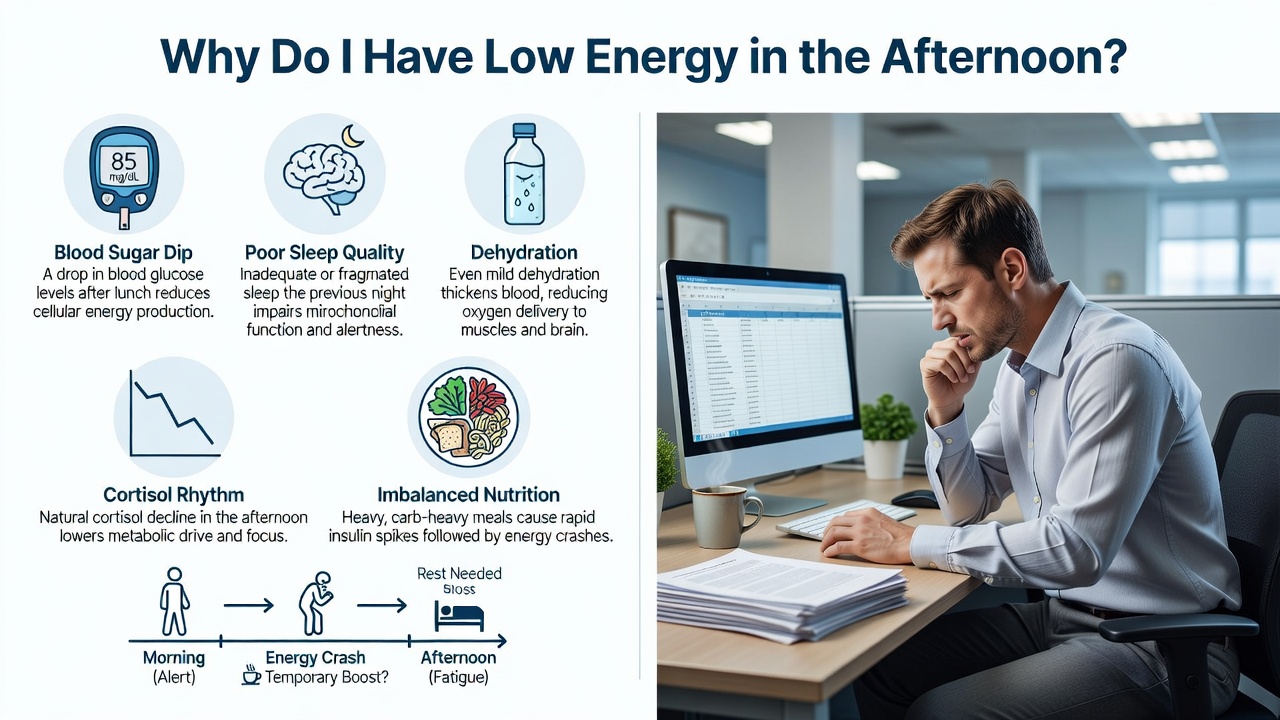
If you feel a wave of fatigue hit between 1 PM and 3 PM almost every day, you are not imagining it and you are not alone. The afternoon energy slump is one of the most commonly reported complaints among working adults, and it has a genuine biological explanation. Your body is not broken — it is following a deeply programmed internal clock. Understanding why this happens, and what makes it worse, is the first step toward reclaiming your afternoon productivity.
This article breaks down the science behind the post-lunch dip, the lifestyle factors that amplify it, and evidence-based strategies to manage it effectively.
Your Circadian Rhythm Is the Primary Driver
The human body operates on a roughly 24-hour biological clock known as the circadian rhythm. This internal timing system regulates sleep, hormone release, body temperature, and alertness levels throughout the day. Research shows that this clock creates two distinct periods of peak sleepiness: one in the early morning hours (around 2–4 AM) and a secondary dip in the early-to-mid afternoon (approximately 1–3 PM).
This afternoon dip is sometimes called the "post-lunch dip," but it occurs regardless of whether you eat lunch or not. A landmark study published in the journal Sleep demonstrated that the afternoon trough in alertness and performance is a consistent circadian phenomenon driven by the suprachiasmatic nucleus — the brain's master clock — rather than food intake alone. Your brain is biologically programmed to ease off the accelerator in the early afternoon.
During this window, core body temperature dips slightly, melatonin levels nudge upward, and cognitive processing slows. Many cultures around the world have adapted to this biology by building rest periods or naps into the early afternoon — a practice that modern science increasingly supports.
Adenosine: The Sleep Pressure Molecule
A second major mechanism behind afternoon fatigue is adenosine accumulation. Adenosine is a byproduct of cellular energy metabolism — essentially, the more your brain works, the more adenosine builds up in the space between neurons. This molecule binds to receptors that slow neural activity and promote sleepiness, a process researchers call "sleep pressure" or "Process S."
By early afternoon, you have already been awake for six to eight hours. Adenosine has had time to accumulate significantly, which means your brain is already pushing toward rest. This combines with the natural circadian trough to create a perfect storm of fatigue right after midday. This dual-process model of sleep regulation is well established in sleep science and has been described in detail by Borbély et al. as the two-process model of sleep regulation.
Blood Sugar Fluctuations After Lunch
While the circadian dip exists independently of food, what you eat for lunch can dramatically worsen it. High-glycaemic meals — those rich in refined carbohydrates and sugars — trigger a rapid rise in blood glucose followed by an equally rapid crash. During this postprandial glucose drop, the brain receives less steady fuel, contributing to brain fog, difficulty concentrating, and physical tiredness.
Additionally, eating a large meal stimulates the release of cholecystokinin and other gut hormones that signal satiety to the brain. These hormones interact with the sleep-wake circuitry and can increase feelings of drowsiness. Insulin, released to manage the glucose load, also plays a role by facilitating the entry of tryptophan into the brain — a precursor to serotonin and, ultimately, melatonin.
A study in the American Journal of Clinical Nutrition confirmed that high-glycaemic index meals significantly increased afternoon fatigue and reduced alertness compared to low-GI meals. Opting for balanced meals with lean protein, healthy fats, and fibre-rich carbohydrates can meaningfully blunt the post-lunch crash.
Poor Night-Time Sleep Amplifies the Crash
If your afternoon slump feels severe, chronic sleep deprivation is likely making it worse. When you do not get the recommended seven to nine hours of sleep per night, adenosine is never fully cleared overnight, and your baseline alertness the next day starts lower than it should. The afternoon dip then hits on top of an already depleted system, making the fatigue feel crushing rather than mild.
The CDC reports that more than one in three American adults do not get enough sleep on a regular basis. Poor sleep quality — caused by sleep apnoea, alcohol consumption, blue light exposure, or irregular schedules — compounds this problem significantly. Addressing night-time sleep is often the single most impactful change a person can make to eliminate severe afternoon fatigue.
Dehydration, Nutrients, and Other Contributing Factors
Even mild dehydration impairs cognitive function and amplifies perceptions of fatigue. A study published in the Journal of Nutrition found that fluid loss of just 1.4% of body weight was enough to degrade mood, concentration, and perceived energy in young women during low-intensity exercise. Many people enter the afternoon mildly dehydrated after a morning of coffee and minimal water intake.
Nutritional deficiencies can also contribute. Low iron, vitamin D, B12, and magnesium are all associated with fatigue and reduced energy production at the cellular level. Iron is necessary for oxygen transport, B12 for neurological function, and magnesium for ATP synthesis. If you eat well and sleep adequately but still experience persistent afternoon crashes, bloodwork to check these levels is a sensible next step.
Sedentary behaviour is another underappreciated amplifier. Sitting at a desk for hours reduces circulation, drops blood pressure slightly, and slows metabolic rate — all of which contribute to feelings of sluggishness. Even a five-minute walk has been shown to boost alertness and mood in the short term.
Evidence-Based Strategies to Beat the Afternoon Slump
1. Prioritise consistent, quality sleep. Go to bed and wake at the same time daily. Even weekend sleep schedule shifts ("social jet lag") disrupt circadian alignment and worsen the afternoon dip. Aim for seven to nine hours in a cool, dark room.
2. Eat a balanced lunch. Replace refined carbohydrates with lean proteins, vegetables, legumes, and healthy fats. Foods like grilled chicken, leafy greens, eggs, nuts, and whole grains stabilise blood sugar and prevent the insulin-driven crash. Avoid heavy, calorie-dense meals that require significant digestive energy.
3. Stay consistently hydrated. Drink water throughout the morning before you feel thirsty. Carrying a water bottle and setting a reminder to drink every 45 to 60 minutes can make a significant difference in afternoon alertness.
4. Use caffeine strategically. Because caffeine works by blocking adenosine receptors, timing matters. Research suggests that delaying your first coffee until 90 to 120 minutes after waking allows cortisol to peak naturally, making caffeine more effective later. A moderate caffeine dose at noon or early afternoon can help manage the circadian trough, but avoid intake after 2 PM to protect night-time sleep quality.
5. Take a short nap — if possible. A 10–20 minute nap during the circadian trough has been shown in multiple studies to restore alertness, improve cognitive performance, and reduce sleepiness without causing post-nap grogginess (sleep inertia). The NASA nap study famously found that a 26-minute nap improved pilot performance by 34% and alertness by 100%.
6. Move your body. A brisk five-to-ten minute walk, stretching, or light exercise during the early afternoon increases heart rate, improves circulation, and triggers the release of norepinephrine — a natural alertness-promoting neurotransmitter. Even standing up and moving around the office counts.
7. Get morning sunlight exposure. Bright light in the morning anchors your circadian rhythm and promotes a stronger, more timed afternoon dip that is easier to manage. Ten to twenty minutes of outdoor light before 10 AM can improve overall energy rhythm throughout the day.
When Afternoon Fatigue Signals Something More
Mild afternoon tiredness is normal and biological. However, if your fatigue is severe, persistent, accompanied by other symptoms, or interfering with daily function, it may indicate an underlying health condition. Thyroid disorders, anaemia, type 2 diabetes, sleep apnoea, depression, and chronic fatigue syndrome can all present with pronounced afternoon exhaustion. A thorough evaluation by a healthcare provider, including relevant bloodwork, is warranted if lifestyle changes do not bring improvement within several weeks.
Frequently Asked Questions
Scientific References
Editorial Information
Sarah Mitchell writes educational content covering health, nutrition, and wellness topics. Her work is intended to present information in a clear and accessible format while encouraging readers to consult qualified healthcare professionals for personal medical advice.